

Quick answer
The Tulum ruins cost 95 MXN per person for general admission, payable only in cash at the entrance. This INAH fee grants access to the archaeological zone from 08:00 to 17:00 daily. Credit cards are not accepted at the ticket window, and the fee does not cover parking, guided tours, or access to the adjacent beach area, each of which incurs separate charges.
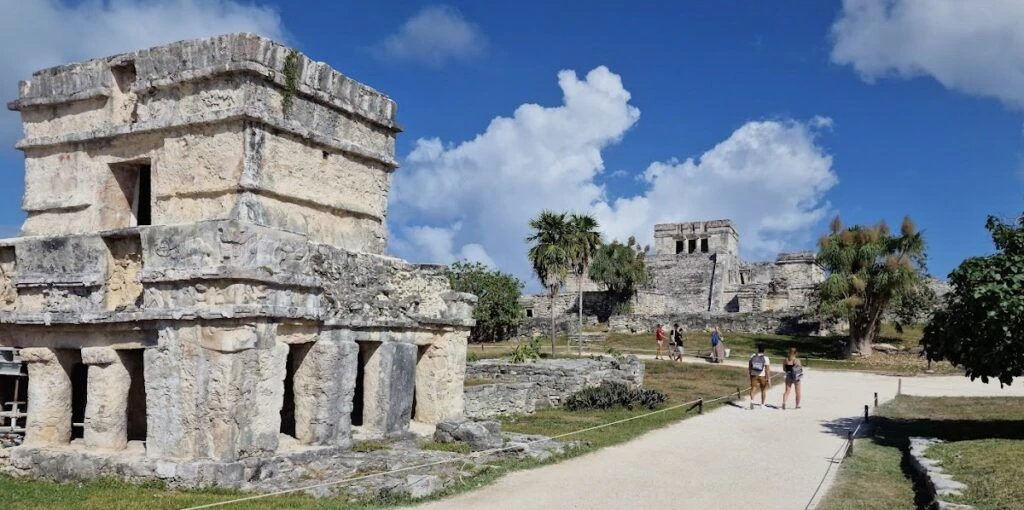
The archaeological zone at Tulum operates under federal jurisdiction, which means admission pricing follows the standardized INAH structure applied across Mexico's protected heritage sites. The 95 MXN gate fee represents the baseline cost to walk the clifftop ruins independently, but most visitors encounter additional expenses before they reach the ticket window. Parking lots near the site entrance charge between 50 and 100 MXN depending on proximity and vehicle size. A short walk or shuttle ride connects the parking area to the archaeological zone gate, and some operators bundle transport with parking fees. Licensed guides working the entrance plaza typically charge 600 to 800 MXN for group tours covering the site's history and major structures, while private tours command higher rates. These services are entirely optional—the ruins are well-signed and navigable without narration—but many first-time visitors find contextual explanation valuable given Tulum's layered role as both fortress and ceremonial center. The beach below El Castillo, Tulum's signature clifftop temple, sits outside the archaeological perimeter and requires separate access through adjacent beach clubs or public entry points. Visitors planning to combine ruins exploration with beach time should budget accordingly. Water and snacks are available from vendors near the entrance but not within the archaeological zone itself, and prices reflect the captive-market dynamic common to major attractions. Understanding the tulum ruins cost means accounting for these peripheral expenses alongside the admission fee. Arriving with sufficient cash—smaller bills ease transactions—and clarity about which add-ons serve your interests prevents confusion at the gate and keeps your visit moving smoothly through the ticket queue and into the site itself.
“The 95 MXN admission fee covers the archaeological zone only—parking, guides, and beach access operate as separate concessions with their own pricing.”
What Else Factors Into Your Tulum Ruins Cost
The 95 MXN admission is only part of what a visit actually costs. Transport, parking, food, and small on-site purchases typically add more to the total than the ticket itself.
How to spend less
- Bring your own water bottle and snacks from town
- Share a colectivo instead of a private taxi
- Skip the guide tip if self-guiding with a map
- Pack light to avoid locker or storage fees
A no-frills visit runs roughly 150-200 MXN per person, while a more comfortable visit with a taxi, guide tip, and food on site can reach 400-500 MXN per person.
Getting to the Tulum Ruins: Routes and Fares
The archaeological site sits on Carretera Federal 307, on the coastal side just north of Tulum town, with the ruins entrance a short walk from the parking and vendor area. Most visitors reach it from Tulum town or the beach hotel zone by taxi, colectivo (shared van), or rental car, since there is no direct rail or metro service in the region.
Tulum town center to Zona Arqueológica de Tulum, Carretera Federal 307
Colectivo (shared van) along Carretera Federal 307 from Tulum town
Rental car via Carretera Federal 307 northbound from Tulum town
From Tulum beach zone hotels along the coastal road to the site entrance
Tulum Ruins Cost and Opening Hours
The Tulum Archaeological Site opens on the same 08:00–17:00 schedule every day of the week, with no rest day. That single admission window is what your INAH entrance fee grants access to.
| Monday | 08:00 – 17:00 | |
|---|---|---|
| Tuesday | 08:00 – 17:00 | |
| Wednesday | 08:00 – 17:00 | |
| Thursday | 08:00 – 17:00 | |
| Friday | 08:00 – 17:00 | |
| Saturday | 08:00 – 17:00 | |
| Sunday | 08:00 – 17:00 |
Best Time to Visit After Paying the Tulum Ruins Cost
The 08:00–09:30 arrival window is the single best time to enter, since it beats both the midday heat and the wave of tour buses that arrive from Cozumel and Playa del Carmen cruise transfers by late morning.
Arrival 08:00–09:30
Lightest crowds of the dayWarm, around 24–27°C, low humidity
Gates just opened, so paths and viewpoints along the cliff are still walkable without crowd bottlenecks.
Midday 11:00–14:00
Peak crowds, tour buses arriveHot, often 30–34°C, high humidity
Group tours converge with cruise excursions, and direct sun on the limestone site makes walking less comfortable.
Dry season, Nov–Apr
Busiest months overallWarm, drier, 24–29°C, less rain
This is Tulum's high season for visitors, so even the early window sees more people than in low season.
Rainy season, Jun–Oct
Thinner crowds, more flexibilityHot, humid, 27–33°C, afternoon showers common
Mornings stay the safest bet since brief rain and higher humidity build up as the day goes on.
Weekday mornings
Noticeably fewer visitors than weekends—
Weekend mornings draw more regional day-trippers, so a weekday arrival at opening compounds the advantage.
Verdict: Arrive right at opening, 08:00–09:30, on a weekday during the rainy season months of June through October for the fewest crowds overall.
Rules to Know Before Paying the Tulum Ruins Cost
The 95 MXN entrance fee grants access to a protected archaeological zone with strict preservation rules. Respect for the site and other visitors ensures everyone can explore safely.
Do
- Bring exact cash in pesos for the 95 MXN fee
- Stay on marked pathways and behind roped barriers
- Wear reef-safe sunscreen if visiting the adjacent beach
- Keep voices low near ceremonial structures
- Dispose of all trash in designated bins
Don't
- Don't touch, climb, or lean on any stone structures
- Don't fly drones without prior INAH authorization
- Don't block pathways or structures for extended photo sessions
- Don't bring large backpacks or professional camera equipment without permits
- Don't assume card payments work at the entrance gate
Facts Worth Knowing Beyond the Tulum Ruins Cost
Beyond logistics, Tulum holds a few details that surprise first-time visitors and reward a closer look at the site itself.
Tulum is a walled coastal city
It is one of the few Maya sites built directly on a Caribbean-facing cliff, with stone walls enclosing the site on its three landward sides for defense.
Its original name was Zama
Before the name Tulum came into use, the city was likely called Zama, meaning dawn, a fitting reference to its position facing the sunrise over the sea.
El Castillo doubled as a landmark for sailors
The tallest structure at the site sits on a bluff overlooking the water and is thought to have helped guide Maya canoe traffic safely through openings in the offshore reef.
The Descending God appears above several doorways
A carved figure shown upside down, known as the Descending God, appears on structures across the site including the Temple of the Descending God, though its exact meaning is still debated by archaeologists.
The name Tulum means wall
The modern name was applied after the classic Maya period and refers directly to the stone walls that still enclose the ceremonial core.
Check availability
FAQ: Tulum Ruins Cost, Fees & Visiting Tips
Everything you need to know about tulum ruins cost