

Quick answer
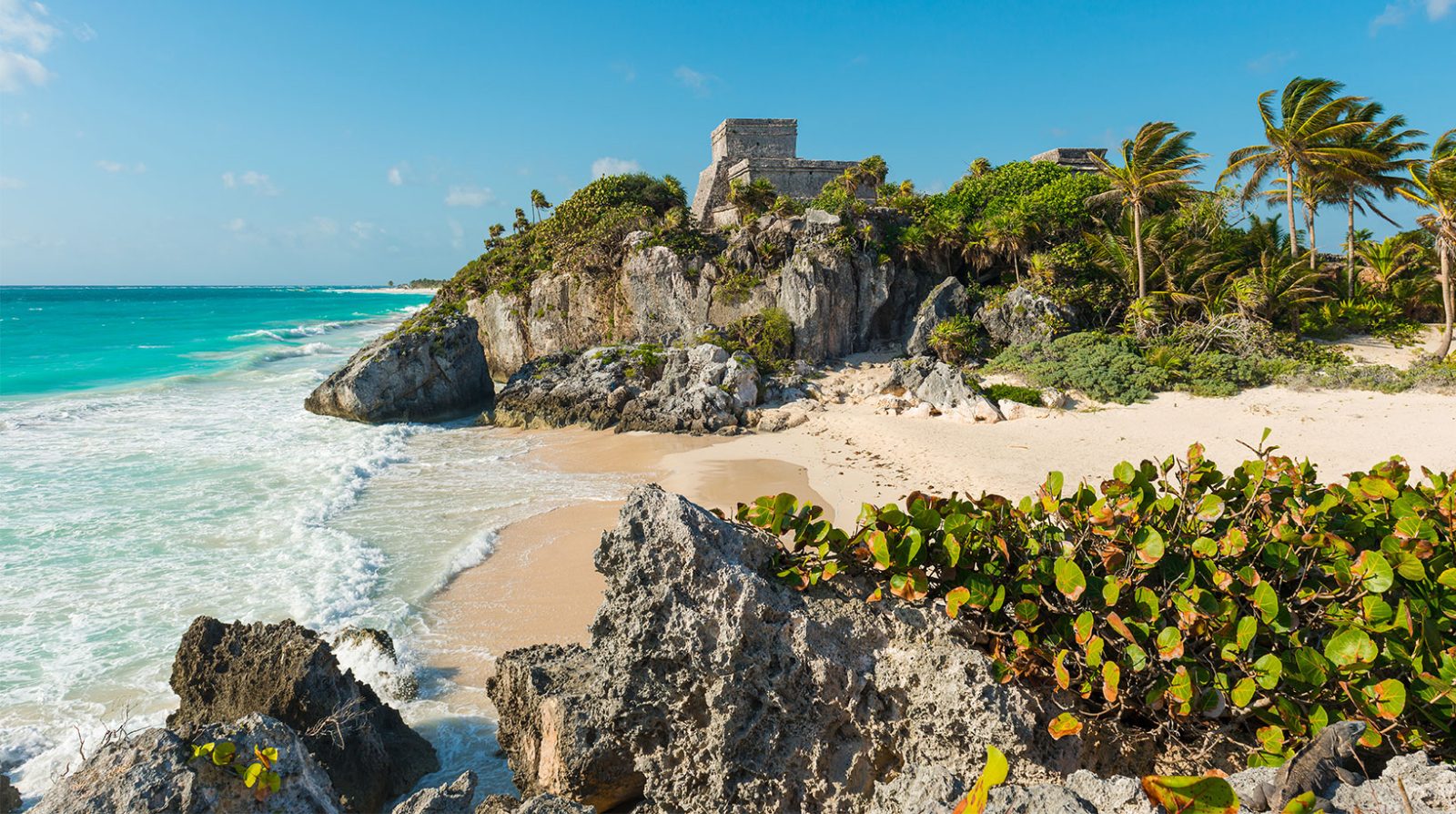
Yes, the Tulum ruins are worth seeing for their unique clifftop setting and compact layout. The site combines Maya architecture with Caribbean views in a manageable area—you can see El Castillo, the Temple of the Frescoes, and the walled perimeter in under two hours. Arrive between 08:00 and 09:30 to avoid tour bus crowds and heat. The 95 MXN entrance fee is the federal INAH rate.
Tulum receives over two million visitors annually, making it the third most-visited archaeological site in Mexico after Teotihuacan and Chichén Itzá. The reason is not scale—Tulum covers just 15 acres, a fraction of Cobá or Uxmal—but position. El Castillo, the site's tallest structure, sits on a 12-meter limestone cliff directly above a public beach, creating the postcard image that defines Tulum. The walled city functioned as a port between 1200 and 1450 CE, during the Maya Postclassic period when inland centers had declined. Traders arrived by canoe through a break in the barrier reef, visible from the site today as a turquoise gap in the offshore water. The Temple of the Frescoes preserves interior murals depicting the rain god Chaac and the descending god unique to Tulum's iconography. The Templo del Dios Descendente, near the north wall, shows the same figure carved in stucco above its doorway. Whether Tulum is worth seeing depends on what you compare it to. The ruins lack the monumental pyramids of Chichén Itzá or the intricate stone mosaics of Uxmal. What they offer is proximity—40 minutes from Playa del Carmen, 90 minutes from Cancún—and compactness. You walk a single looped path past every major structure, with interpretive plaques in Spanish and English. The site closes at 17:00, and the last comfortable touring window ends around midday when the limestone platforms radiate stored heat. The clifftop location also creates the site's main constraint: capacity. A wooden staircase descends from the archaeological zone to the beach below, where visitors swim after touring the ruins. On high-season days—December through April, and July—the site reaches its informal capacity by 10:00, and the clifftop path becomes a slow-moving file. Visiting this Maya port means accepting that its accessibility has made it crowded, or arriving early enough to see it without the crowds.
“Tulum functioned as a port when inland Maya centers had already declined, giving it a coastal layout found nowhere else in the region.”
What You Actually See at the Tulum Ruins
The Tulum ruins pack a compact set of named structures into a walled clifftop site, so most visitors can see the highlights in a single loop. Four features do the heavy lifting: El Castillo, the Temple of the Frescoes, the Temple of the Descending God, and the cliffside view over the Caribbean.
El Castillo
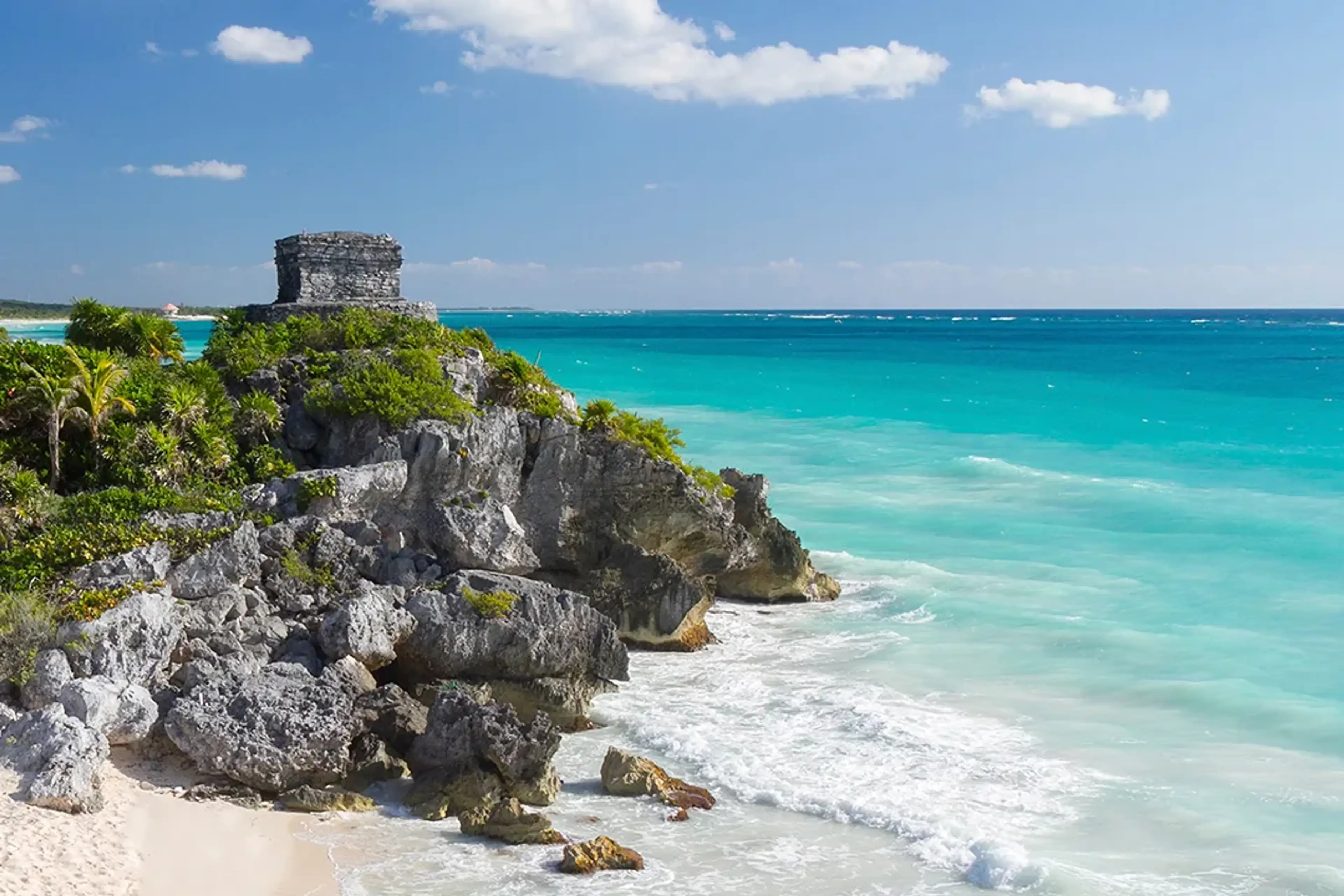
The tallest structure at Tulum, a stepped pyramid-temple on the edge of the limestone bluff that likely served as a lighthouse-like landmark for seafaring traders.
View it from the beach access path below for the full facade.
Temple of the Frescoes
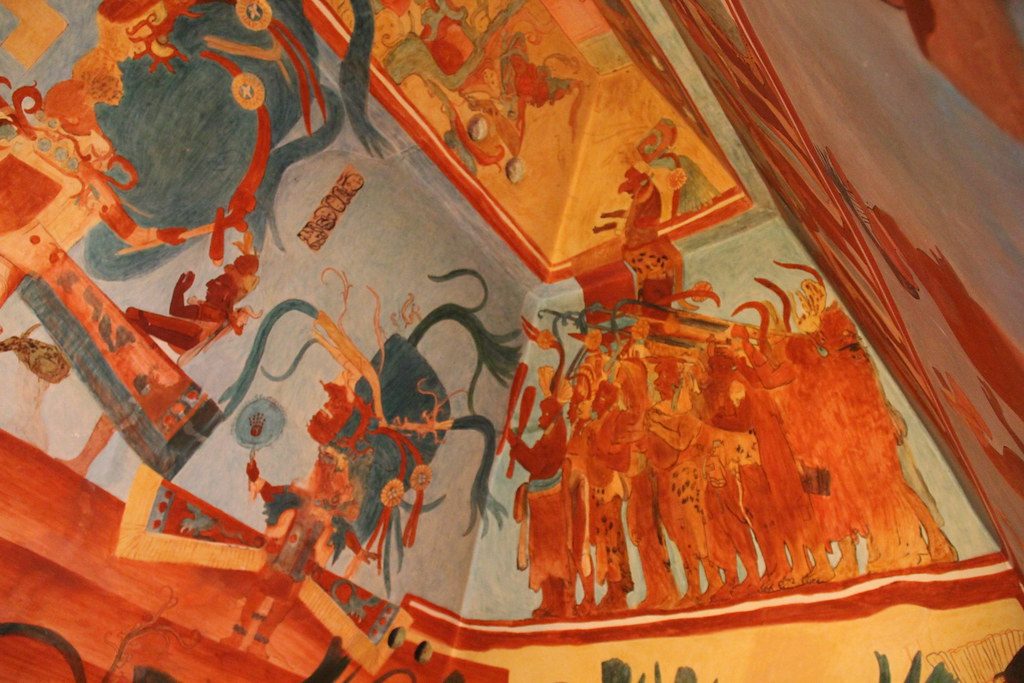
A smaller inner structure with a two-level gallery still holding faded murals of deities, maize, and celestial imagery, protected behind a roped perimeter.
Look for mural fragments on the upper cornice, not just ground level.
Temple of the Descending God
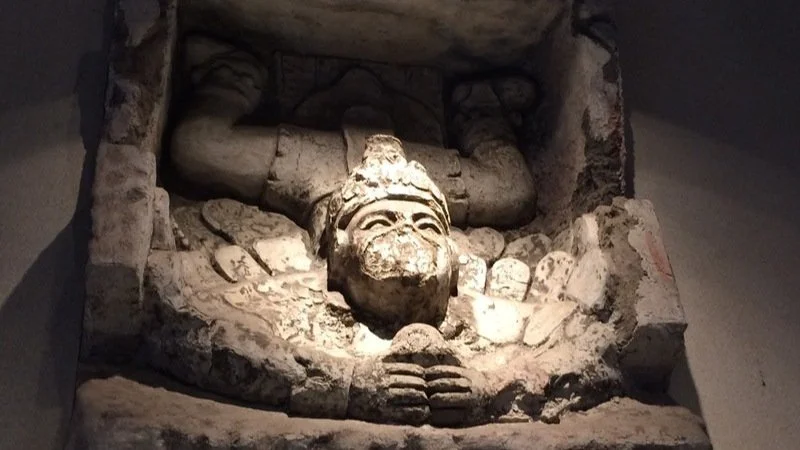
Named for the carved inverted figure above its entrance, thought to represent a diving or descending deity linked to Venus or bees.
Check the lintel carving directly above the doorway.
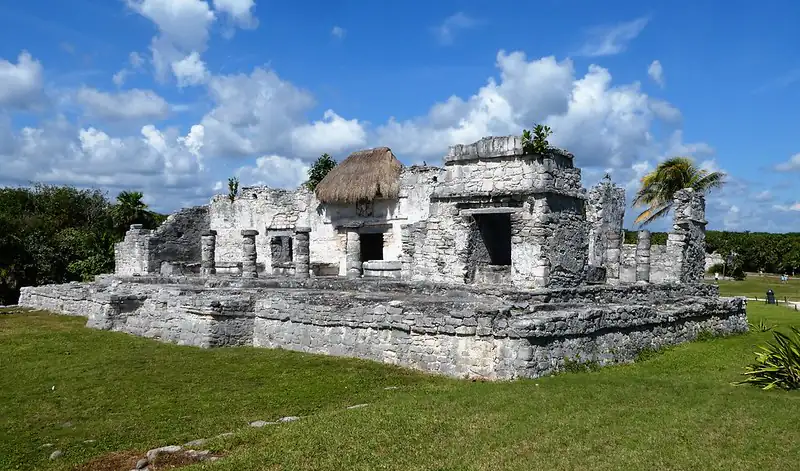
House of the Halach Uinic
Believed to be the residence of Tulum's ruling elite, set near the site's central plaza with views toward El Castillo.
Note its position relative to El Castillo for site layout.
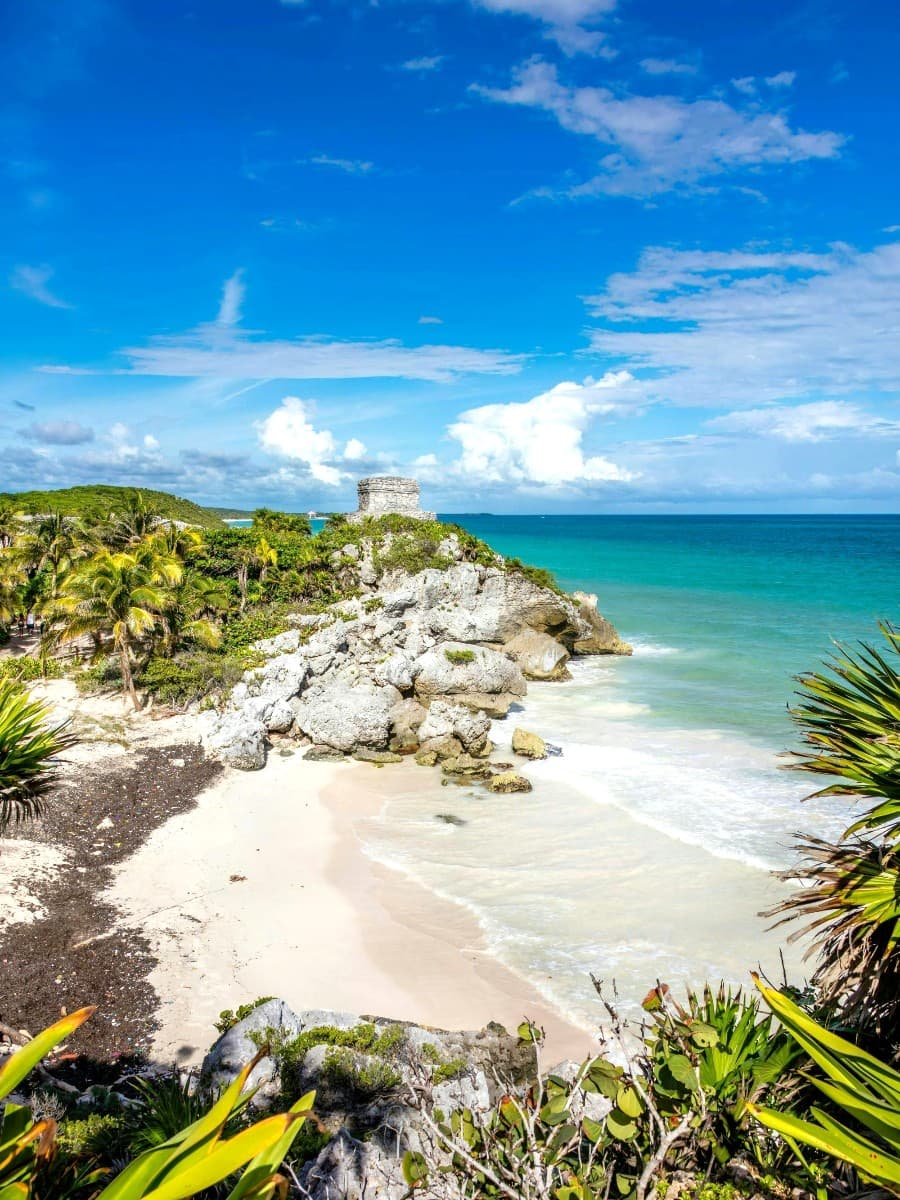
Clifftop beach view
The gap in the perimeter wall opens onto a small cove beach beneath the ruins, one of the only beach-access archaeological sites in the region.
Time a few minutes here away from the main structures.
Are the Tulum Ruins Worth Seeing Early Morning or Midday
The 08:00–09:30 arrival window is the single best time to see the Tulum ruins, since temperatures are cooler and the tour buses and cruise-excursion groups haven't yet arrived.
08:00–09:30 daily
Smallest crowds, few tour groupsWarm, around 26-28°C, low humidity buildup
Gates open at 08:00 and the first hour is consistently the quietest, giving clear sightlines to the coastal structures before groups fill the paths.
10:30–14:00 daily
Peak crowds, tour buses and cruise groupsHot, often 32-34°C with high humidity
This window overlaps with bus arrivals from Cancun and Playa del Carmen plus cruise-ship excursion schedules, so paths narrow and shade is scarce.
November to April
Moderate crowds, steady visitor flowDry season, daytime highs around 28-30°C
Lower humidity makes the midday heat more tolerable, though this is also the busiest tourist season overall so early arrival still matters.
May to October
Crowds thin midday due to heatHot and humid, 32-35°C, hurricane season risk June-November
Rain showers and higher humidity push more visitors toward early morning, and afternoon storms can cut visits short.
Verdict: Arrive right at gate opening, 08:00 to 09:30, and favor November through April for the most comfortable combination of light crowds and manageable heat.
Why the Tulum Ruins Are Historically Worth Seeing
Tulum rose as a fortified Maya port during the Postclassic period, between 1200 and 1450 CE, when most inland cities had already collapsed. The settlement commanded a clifftop position above the Caribbean, rare among Maya sites, and controlled coastal trade routes linking the Yucatán interior with Central America. Spanish chroniclers documented Tulum still inhabited in 1518 when Juan de Grijalva's expedition sighted the painted temples from the sea. Unlike Chichén Itzá or Tikal, Tulum survived conquest for decades; the city likely emptied only after European disease and disruption severed the trade networks that sustained it. The site's defensive wall, enclosing three landward sides, set Tulum apart from ceremonial centers built for ritual rather than security. Archaeologists argue the fortifications reflect the Postclassic era's political fragmentation and increased warfare. Murals inside the Temple of the Frescoes, painted around 1450, depict rain deity Chaac and cosmic serpents in a fusion of Maya and central Mexican iconography, evidence of the long-distance exchange that made Tulum prosperous. The city functioned as both shrine and customs post, where canoes laden with obsidian, jade, and cacao stopped under the watch of ruling lineages. Today visitors walk the same limestone plaza the Maya leveled five centuries ago. El Castillo, the clifftop pyramid that guided canoes through the reef, still anchors the site. The frescoes endure inside the Temple of the Frescoes, though centuries of humidity have dimmed their pigment. For those asking are the Tulum ruins worth seeing, the answer lies in this intersection of documented survival, strategic location, and visible continuity with the world described in early colonial accounts. Few Maya ruins offer such direct testimony to the final decades before European contact reshaped the coast.
Tulum established as a fortified coastal trading port during the Maya Postclassic period.
Temple of the Frescoes murals painted, depicting rain deity Chaac and cosmic iconography.
Spanish expedition led by Juan de Grijalva sights the city from sea; Tulum remains inhabited.
Population declines as Spanish disruption and disease collapse coastal trade networks.
Explorers John Lloyd Stephens and Frederick Catherwood document Tulum's clifftop structures.
Carnegie Institution begins formal archaeological surveys of the site.
Mexican government stabilizes the ruins and opens Tulum to public access.
Facts That Answer Whether the Tulum Ruins Are Worth Seeing
Beyond its postcard setting, Tulum holds a handful of verified details that explain why it stands apart from other Maya sites in Mexico.
Zama was the original name
Archaeologists and historians record the city's Maya-era name as Zama, meaning dawn or city of dawn, a reference to its position facing the sunrise on the Caribbean coast. The name Tulum, meaning wall, was applied later.
It sits on one of the only coastal Maya sites
Tulum is one of the few major Maya cities built directly on the Caribbean shoreline, which allowed it to function as a maritime trading port linking inland Yucatan with coastal and seaborne trade routes.
A defensive wall encloses three sides
The settlement is bordered by a stone wall on its landward sides, with the sea forming a natural barrier on the fourth, a layout uncommon among Maya urban centers.
Spanish explorers recorded it while still active
Tulum was still inhabited when Juan de Grijalva's Spanish expedition sailed past the coast in 1518, making it one of the few Maya cities documented by Europeans before it was abandoned.
The city thrived late in Maya history
Most construction and peak activity date to the Postclassic period, roughly the 1200s to 1500s CE, centuries after the decline of larger inland cities like Chichen Itza.
Cliffs raise the site above the sea
The ruins stand atop limestone cliffs facing the Caribbean, elevating the main structures above the shoreline below.
El Castillo doubled as a navigation marker
The tallest structure at the site is thought to have helped guide canoe traffic along the coast, functioning in a role similar to a lighthouse.
Getting to the Tulum Ruins: Is the Trip Worth the Effort
The Tulum ruins sit on the coast just north of Tulum town, right off Carretera Federal Tulum-Boca Paila Km 1, close to the junction with Highway 307. Most visitors arrive by taxi, rental car, or colectivo from the hotel zone or town center, then cover the last stretch from the parking area on foot or by shuttle.
From Tulum town center or hotel zone to Zona Arqueologica de Tulum entrance, Carretera Federal Tulum-Boca Paila Km 1
Highway 307 to Carretera Federal Tulum-Boca Paila, follow signs to Zona Arqueologica parking
Tulum town center to the archaeological site turnoff on Carretera Federal Tulum-Boca Paila
From the parking/visitor area to the ticket entrance and site access point
From the site entrance path to the main clifftop structures
Tulum Ruins Opening Hours: When You Can Visit
The Tulum Archaeological Site keeps the same schedule every day of the week, with no weekly closure day.
| Monday | 08:00 – 17:00 | |
|---|---|---|
| Tuesday | 08:00 – 17:00 | |
| Wednesday | 08:00 – 17:00 | |
| Thursday | 08:00 – 17:00 | |
| Friday | 08:00 – 17:00 | |
| Saturday | 08:00 – 17:00 | |
| Sunday | 08:00 – 17:00 |
Rules to Know Before You Decide the Tulum Ruins Are Worth Seeing
The site enforces strict preservation rules that directly affect how you experience the ruins. Violating them can result in fines or removal from the grounds.
Do
- Stay on marked pathways and wooden walkways
- Bring reef-safe sunscreen and refillable water bottles
- Wear closed-toe shoes with good grip on uneven limestone
- Keep a respectful distance from iguanas and other wildlife
- Use the beach access point at the southern end
- Arrive before 09:30 to explore before peak heat
Don't
- Don't climb on or touch the archaeological structures
- Don't bring single-use plastics, large bags, or tripods
- Don't use drones without prior INAH authorization
- Don't feed wildlife or remove stones, shells, or plants
- Don't block pathways for group photos
- Don't enter roped-off restoration zones
Check availability
FAQ: Are the Tulum Ruins Worth Seeing?
Everything you need to know about are the tulum ruins worth seeing