

Quick answer
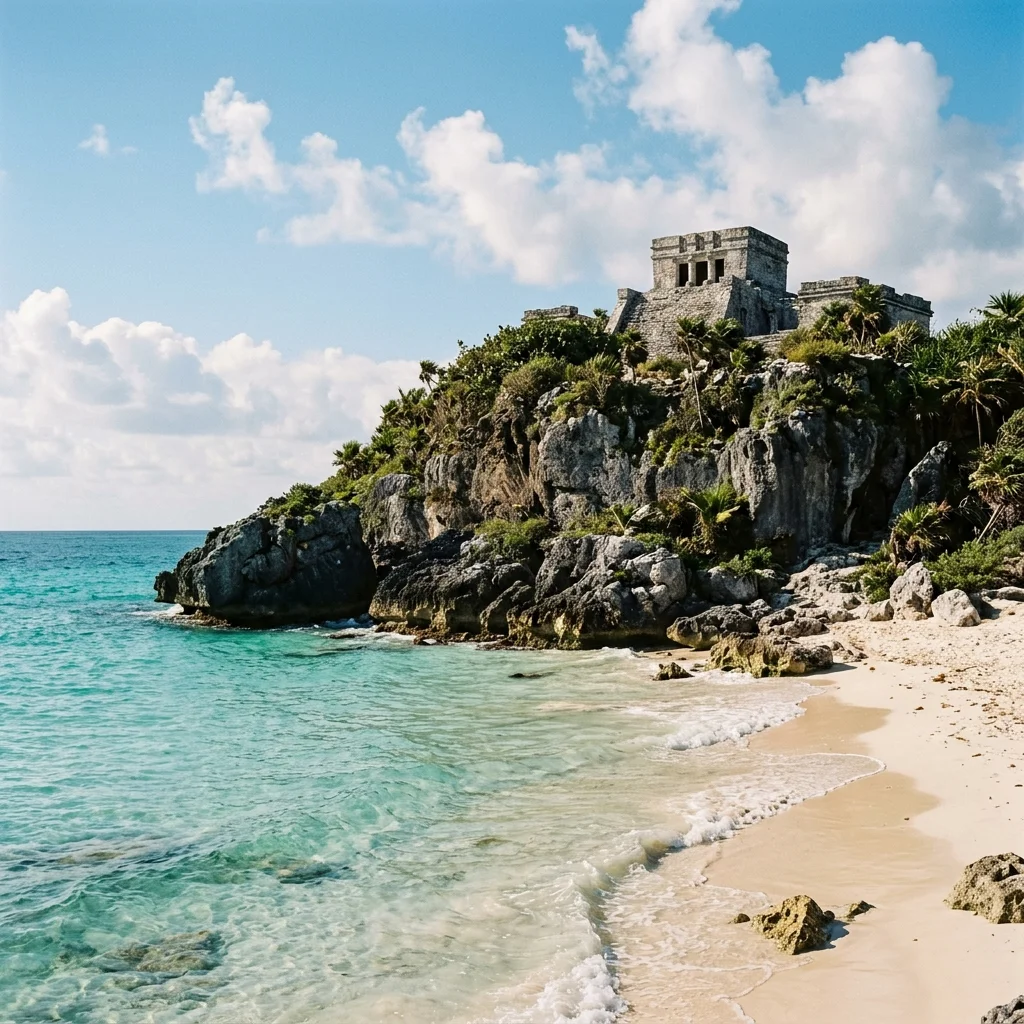
A comprehensive tulum ruins tour guide covers the site's three main zones—the Temple of the Frescoes with its stucco masks, El Castillo pyramid overlooking the sea, and the Temple of the Descending God—plus arrival strategy and crowd patterns. The 95 MXN federal entrance fee grants access to the walled ceremonial precinct, where most visitors spend 90 minutes to two hours exploring structures along marked pathways. Arriving between 8:00 and 9:30 AM puts you ahead of tour-bus waves that peak mid-morning.
Tulum reached its peak between 1200 and 1450 CE as a trading port for jade, obsidian, and cacao, long after cities like Tikal had declined. Spanish explorers documented the walls still standing in 1518, making Tulum one of the last Maya cities occupied at contact. The site's name means "wall" in Yucatec Maya, referencing the limestone barrier that enclosed the ceremonial core on three sides while the Caribbean formed the fourth. El Castillo dominates the bluff's edge, a 7.5-meter pyramid that served as both temple and navigational beacon for canoes threading the offshore reef. The Temple of the Frescoes two terraces below preserves faint murals depicting the rain god Chaac and the maize deity, their pigments protected by the structure's inward-leaning walls. The Temple of the Descending God above the site's western gate takes its name from the stucco figure diving headfirst above the doorway, likely representing the setting sun or the bee god connected to honey trade. Modern guided tours of the Tulum ruins typically enter through the main gate on the site's landward side, follow the sacbe—the white limestone road—past the House of the Halach Uinik (the ruling lord's residence), and descend wooden stairs to the beach platform below El Castillo. The layout is linear and the signage minimal, so hiring a certified guide or joining a small-group walking tour adds context that static plaques omit. Photography is permitted throughout, though drones require federal authorization from INAH. The site's exposure means afternoon heat and sun glare intensify by midday. Shade is scarce within the walls—most structures lack roofs, and the few trees cluster near the entrance. Visitors sensitive to heat should align their tulum ruins tour guide strategy with early hours, carry reef-safe sunscreen, and plan the beach portion of the visit for late morning when the clifftop circuit is complete. The ruins close at 17:00 daily, with last entry typically 30 minutes prior, giving the site a predictable rhythm that rewards those who arrive when gates open.
“El Castillo served as both temple and navigational beacon for canoes threading the offshore reef.”
Tulum Ruins Tour Guide: A Time-Slotted Visit Plan
This plan suits independent visitors who want to explore the site's clifftop temples and coastal views at their own pace. Allocate 1–1.5 hours for a focused walk or 2–3 hours if you plan to photograph, rest at the beach access, and linger in the shaded zones.
Entrance & Initial Ascent
Walk from the ticket gate through the forest path to the main plaza—about 400 meters on a paved trail. Arrive early to claim shade near the central structures before the sun intensifies.
El Castillo & Cliff Edge
Circle the pyramid perched above the Caribbean, then descend the wooden staircase to the cove for photos. The beach is small; most visitors return after 10 minutes.
Temple of the Frescoes
Study the two-tiered building with carved masks and remnants of blue-and-red murals inside the lower chamber. A rope barrier keeps you two meters back; bring a phone zoom or binoculars.
Temple of the Descending God & Northern Structures
Pass the small temple with its upside-down deity carving, then loop through the House of the Columns and House of the Halach Uinic. These are less crowded; docent groups rarely stop here.
Casa del Cenote & Southern Perimeter
Follow the southern trail to the cenote sinkhole and smaller platforms if you have extra time. The path is uneven limestone; wear closed shoes.
Exit & Shuttle Return
Walk back to the entrance; the return leg feels shorter. Shuttles to the parking lot run every few minutes if you used the paid shuttle on arrival.
Tulum Ruins Tour Guide: What to See at Each Stop
Tulum's walled site groups a handful of named structures along the clifftop and inland plaza. Here is what each one holds.
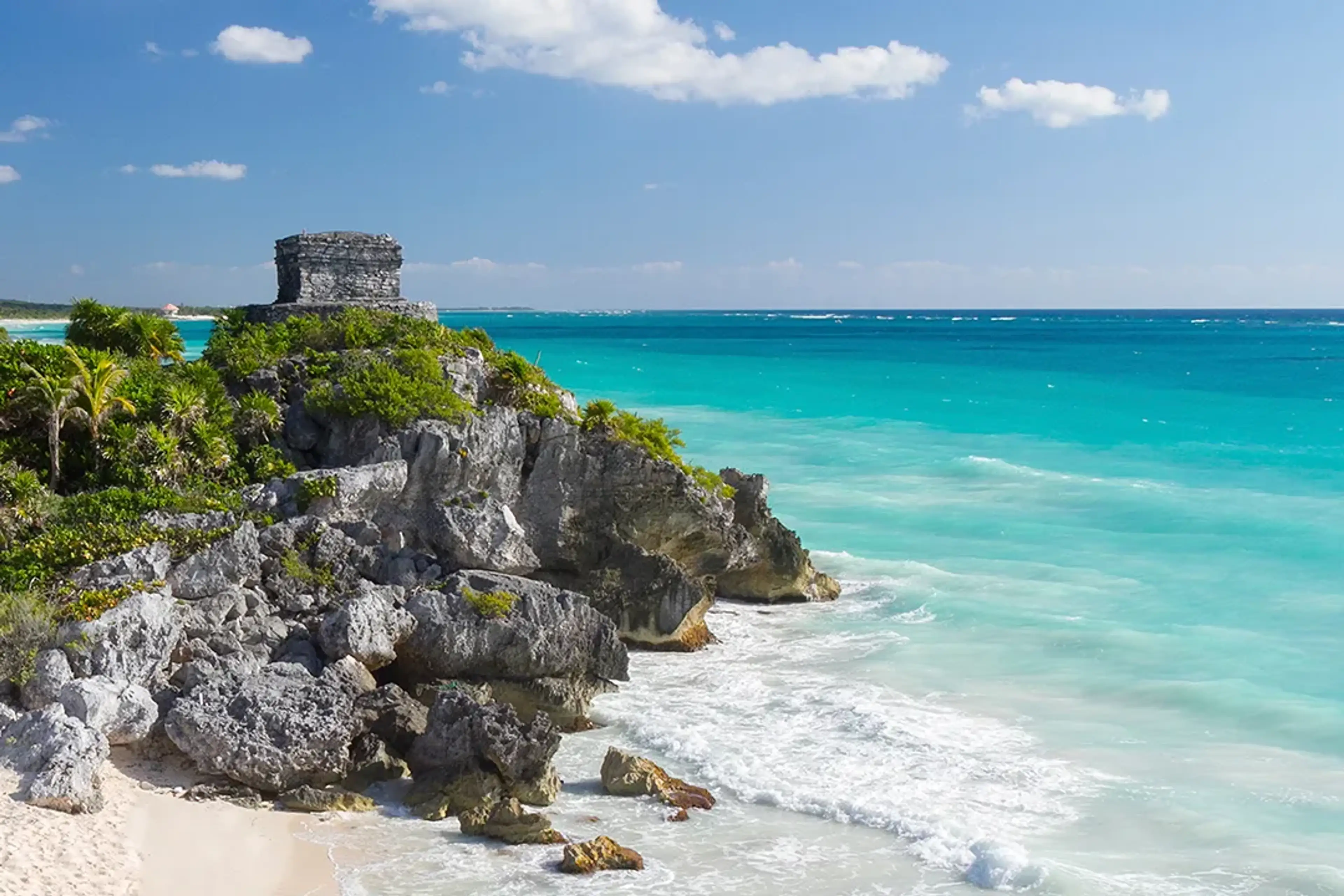
El Castillo
The tallest structure at Tulum, this stepped pyramid sits on the edge of the limestone bluff and likely served as a lighthouse-like marker for canoe traffic entering the reef passage below.
View from the beach path below, not just the platform.
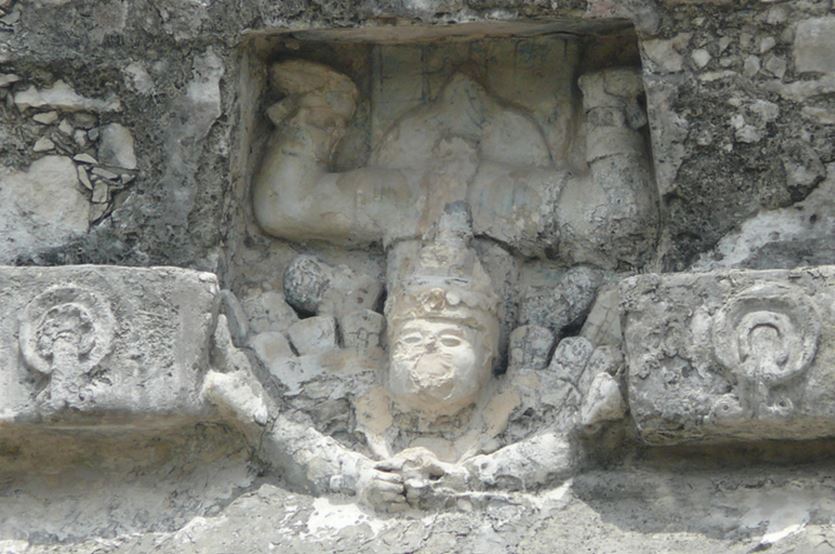
Templo del Dios Descendente
Named for the carved relief of an inverted, descending figure above its doorway, this small temple stands near El Castillo and represents one of Tulum's most distinct iconographic images.
Look up at the lintel carving from directly below.
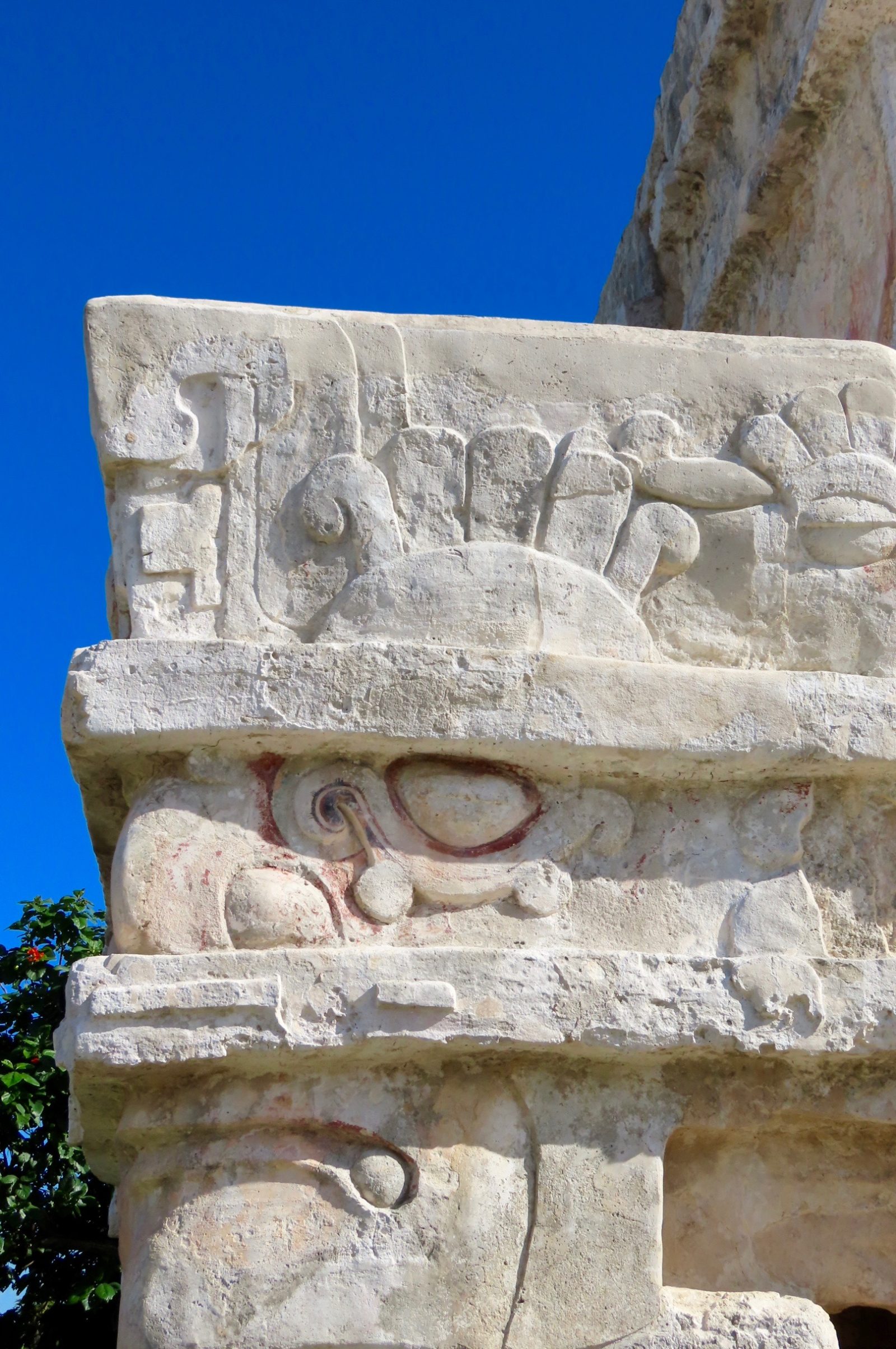
Templo de los Frescos
This inner structure holds faded mural fragments depicting deities, serpents, and maize motifs, sheltered under a modern protective roof and viewed from behind a rope barrier.
Approach the north side for the clearest angle on the murals.
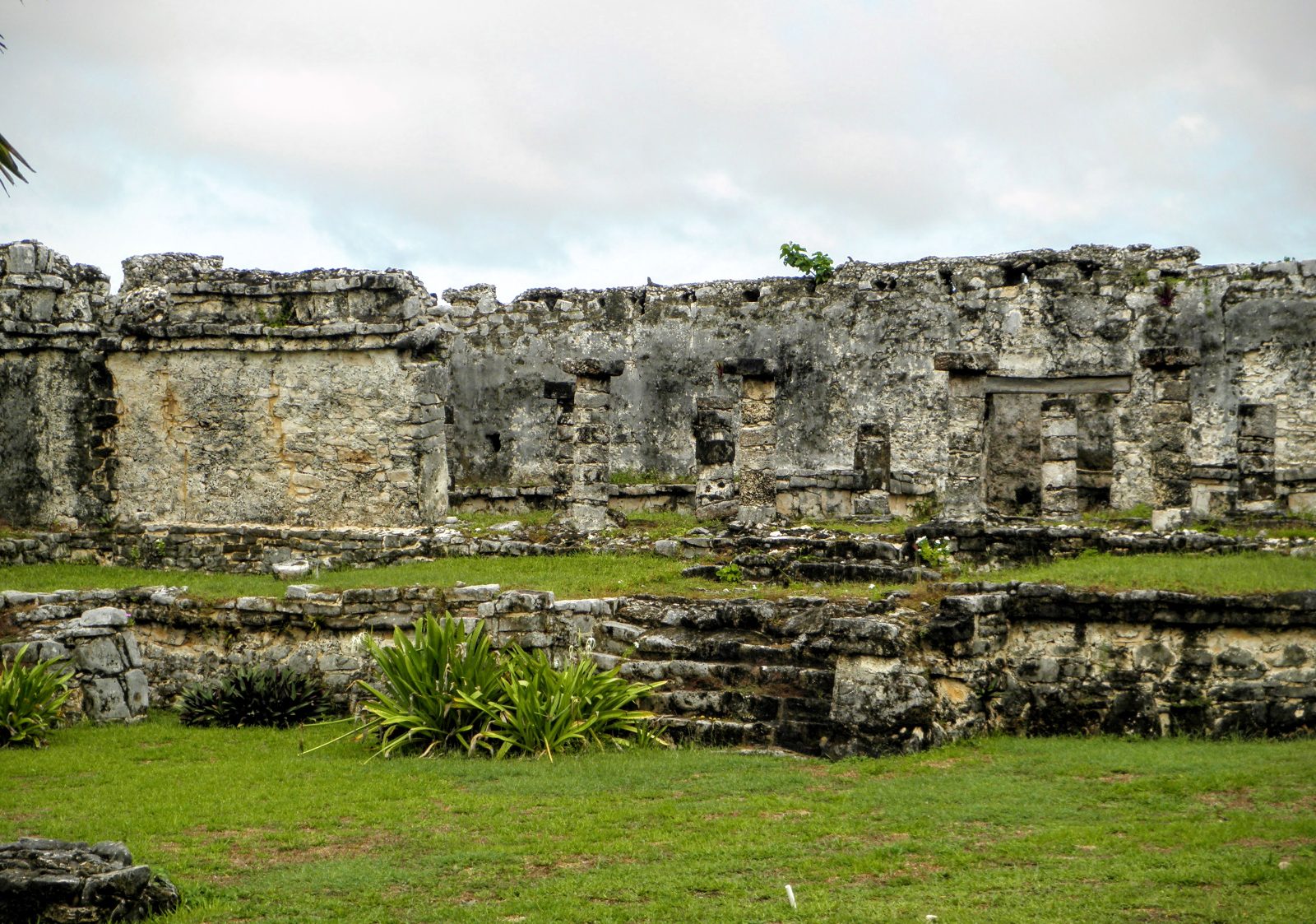
Casa de las Columnas
One of the larger residential-style structures at the site, its multiple stone columns once supported a roof and suggest a building used by elite residents or officials.
Circle the structure to see the column spacing pattern.
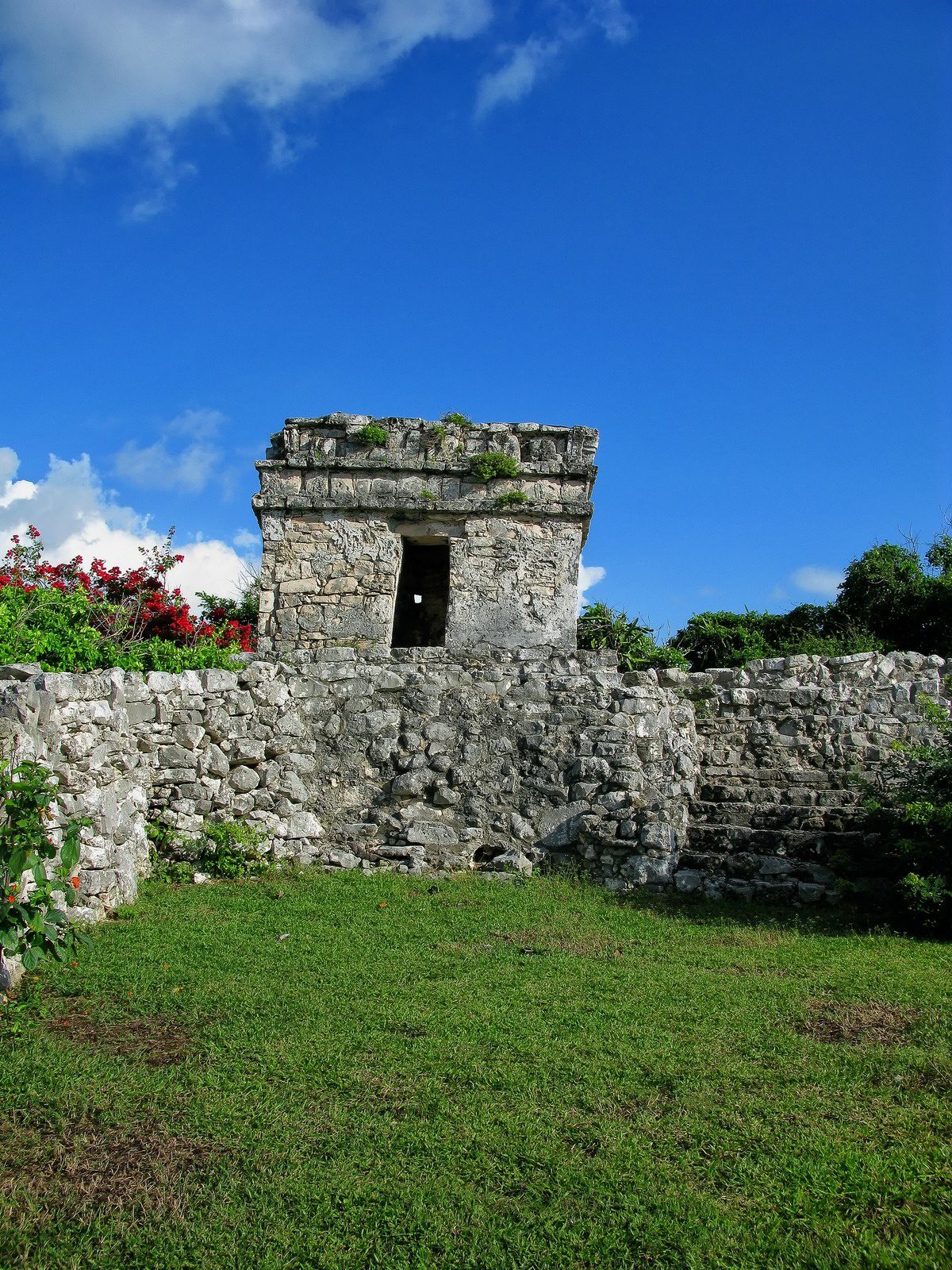
Perimeter Wall
Tulum is one of the few Maya sites enclosed by a defensive wall on three sides, with the sea forming the fourth, and small watchtower structures mark two corners.
Walk the inland wall section for the clearest cross-section view.
Tulum Ruins Tour Guide: The History Behind the Site
Tulum rose to prominence between 1200 and 1450 CE, during the Maya post-classic period when larger inland cities had declined. The settlement commanded a natural harbor protected by the barrier reef, positioning it as a key node in coastal trade networks that linked the Yucatán Peninsula with Honduras and central Mexico. Canoes carrying obsidian, jade, cacao, feathers, and salt docked below the cliffs, their cargo taxed and redistributed by Tulum's ruling elite. Archaeological evidence confirms that the site served both ceremonial and commercial functions, with residential compounds clustered behind the perimeter wall. Spanish chronicler Juan Díaz recorded the first European sighting in 1518, describing buildings painted in vivid colors and a population actively engaged in trade. By the time of formal Spanish contact in the 1540s, Tulum's influence had waned, though small groups continued to inhabit the area into the early colonial period. The site was gradually abandoned as epidemic disease and Spanish encomienda systems disrupted traditional trade routes. Dense jungle reclaimed the structures until the mid-19th century, when explorers John Lloyd Stephens and Frederick Catherwood documented the ruins in published accounts that introduced Tulum to international audiences. Excavation and stabilization work by Mexico's National Institute of Anthropology and History (INAH) began in earnest during the 1970s. Today, visitors joining a Tulum ruins tour guide encounter restored temples, the iconic clifftop Castillo, and remnants of the defensive wall that once enclosed the ceremonial core. Fragments of original stucco and traces of red and blue pigment survive on several facades, offering tangible links to the city's maritime past.
Tulum emerges as a fortified coastal trading post during the Maya post-classic period.
Spanish expedition under Juan Díaz sights the settlement, noting painted buildings and active commerce.
Spanish colonization disrupts trade networks; Tulum's population begins to decline.
Explorer John Lloyd Stephens publishes detailed descriptions and illustrations of the ruins.
INAH launches systematic excavation and conservation programs at the site.
Tulum opens to the public as a protected archaeological zone under federal management.
Tulum Ruins Tour Guide: Best Time to Visit
The single best window is 08:00–09:30, right at opening, when temperatures are still cool and the mid-morning cruise-ship tour buses haven't arrived yet. Crowds build steadily after that and peak by midday.
08:00–09:30 (opening)
Thin, mostly independent visitorsWarm, low-to-mid 20s°C, ocean breeze
This is the quietest stretch of the day, before large tour groups reach the site, giving more open sightlines at the main structures.
10:00–13:00
Heavy, buses arrive in wavesHot, upper 20s to low 30s°C, humid
Cruise-ship and group tours converge here, so pathways and viewing areas around the site's core narrow considerably.
13:00–15:00
Still busy but thinning slightlyPeak heat, low-to-mid 30s°C, little shade
Midday sun combines with lingering crowds, making this the most physically demanding slot despite some groups departing.
Late afternoon (15:30–17:00)
Lighter again as tours departCooling slightly, still warm
Crowds ease as tour buses head back to Cancun and Playa del Carmen, though this window is shorter given site closing.
December–March vs. June–September
Winter draws larger overall visitor numbersWinter mild and dry; summer hot, humid, rain risk
Winter's high season adds more people to every time slot, while summer's heat and afternoon rain showers reshape the midday crowd pattern.
Verdict: Arrive right at 08:00–09:30 on a weekday for the coolest temperatures and the smallest crowd before the mid-morning tour buses take over.
Tulum Ruins Tour Guide: Opening Hours
Tulum Archaeological Site keeps the same schedule every day of the week, with no rest day.
| Monday | 08:00 – 17:00 | |
|---|---|---|
| Tuesday | 08:00 – 17:00 | |
| Wednesday | 08:00 – 17:00 | |
| Thursday | 08:00 – 17:00 | |
| Friday | 08:00 – 17:00 | |
| Saturday | 08:00 – 17:00 | |
| Sunday | 08:00 – 17:00 |
Tulum Ruins Tour Guide: How to Get to the Site
The Tulum Archaeological Site sits on the coast at Carretera Federal Cancun-Tulum Km 230, just north of Tulum town. Most visitors reach it by car, taxi, or collective van along the same federal highway that connects the hotel zone and town center to the ruins entrance.
Carretera Federal Cancun-Tulum (Hwy 307) north from Tulum town to Km 230 turnoff
Direct from Tulum town center or hotel zone via Hwy 307 to the site entrance road
Collective van (colectivo) along Hwy 307 between Tulum town and the ruins turnoff, then short walk to entrance
From the site parking area and visitor center along the entrance path to the ticket booths
Tulum Ruins Tour Guide: Rules and Etiquette
The archaeological zone enforces strict preservation rules to protect structures that date back over 700 years. Federal law prohibits climbing on buildings, and guards actively monitor compliance throughout the site.
Do
- Stay on designated pathways marked by ropes and signage
- Wear reef-safe sunscreen if visiting the beach below the ruins
- Keep hydrated and carry water in reusable bottles
- Respect cordoned areas around fragile structures and restoration zones
- Use the beach access stairs at the north end
Don't
- Don't climb on any structures, walls, or platforms
- Don't touch carvings, stucco reliefs, or stone surfaces
- Don't bring drones—aerial devices are prohibited in the archaeological zone
- Don't remove rocks, plants, or any natural materials
- Don't block pathways during group photos or extended stops
Check availability
FAQs About Your Tulum Ruins Tour Guide Visit
Everything you need to know about tulum ruins tour guide