8 hr 30 min
Tulum Ruins & Two Cenotes Half-Day Adventure
- Expert local guide
- Small group
- Skip-the-line access
- Free cancellation
Tulum Ruins and Cenote Swim — Archaeological Site & Natural Pools
Clifftop Maya temples above the Caribbean, freshwater cenotes below the jungle canopy
Compare fares, pick the fit — all bookings are mobile-voucher and eligible for free cancellation where shown.
8 hr 30 min
10 hr
10 hr
| Experience | Duration | Rating | Pickup | Skip-the-line | Guide | Small group | Price | |
|---|---|---|---|---|---|---|---|---|
|
Guided Experience
Most popular
Tulum Ruins & Two Cenotes Half-Day Adventure
|
8 hr 30 min | ★ 4.4 | ✓ | ✓ | ✓ | ✓ | €24 | Book → |
|
Guided Experience
Tulum Ruins, Cenote Mariposa & Playa del Carmen Day Trip
|
10 hr | ★ 4.6 | ✓ | ✓ | ✓ | ✓ | €31 | Book → |
|
Guided Experience
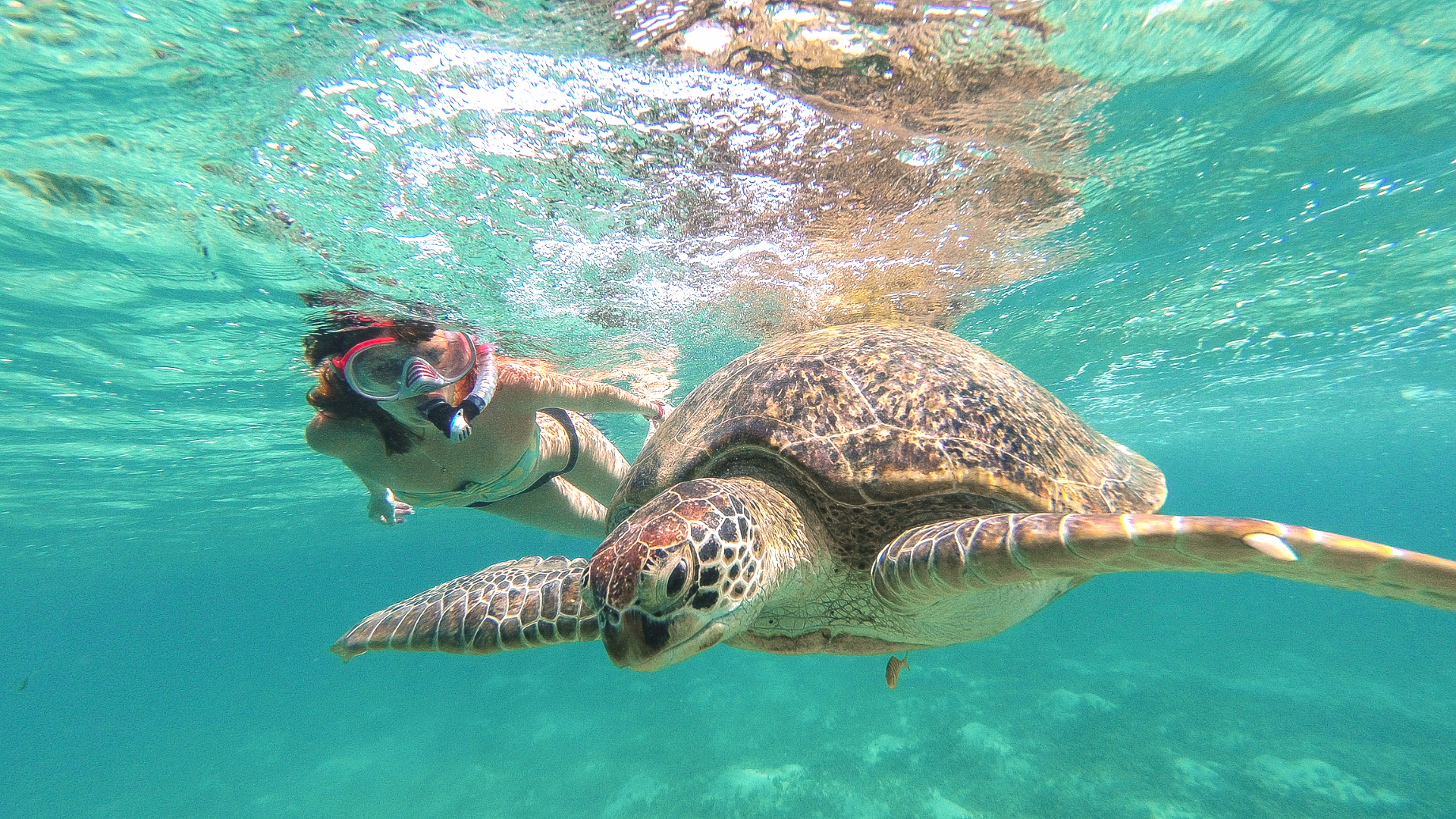
Tulum Ruins, Cenote Swimming & Akumal Turtle Snorkeling Adventure
|
10 hr | ★ 4.5 | ✓ | ✓ | ✓ | ✓ | €76 | Book → |
Worth it if you pair ruins with a cenote tour
The 95 MXN entrance to the Tulum ruins delivers dramatic coastal Maya architecture at a budget price, but the archaeological site itself has no cenote on the property—meaning a true tulum ruins and cenote swim experience requires booking a separate tour that combines both stops. Half-day combos like Tulum Ruins & Two Cenotes Adventure (typically 4-5 hours) give you guided access to the clifftop temples plus swimming in jungle sinkholes, all for around 1,200-1,800 MXN per person including transport. The value math works if you want both the archaeological context and the refreshing swim in one outing, since DIY coordination eats time and the ruins-only visit runs 60-90 minutes. Peak-hour crowds (10:00-14:00) and Yucatán heat can drain the experience, so early arrival matters. For first-timers wanting the postcard clifftop views and a cenote dip, the pairing justifies the cost. If you prefer deeper Maya history, Chichen Itza tours offer more monumental ruins, though they stretch to full-day commitments.
Bottom line: Book a combo tour to get both the coastal ruins and cenote swim—DIY coordination wastes the time you save on the low entrance fee.
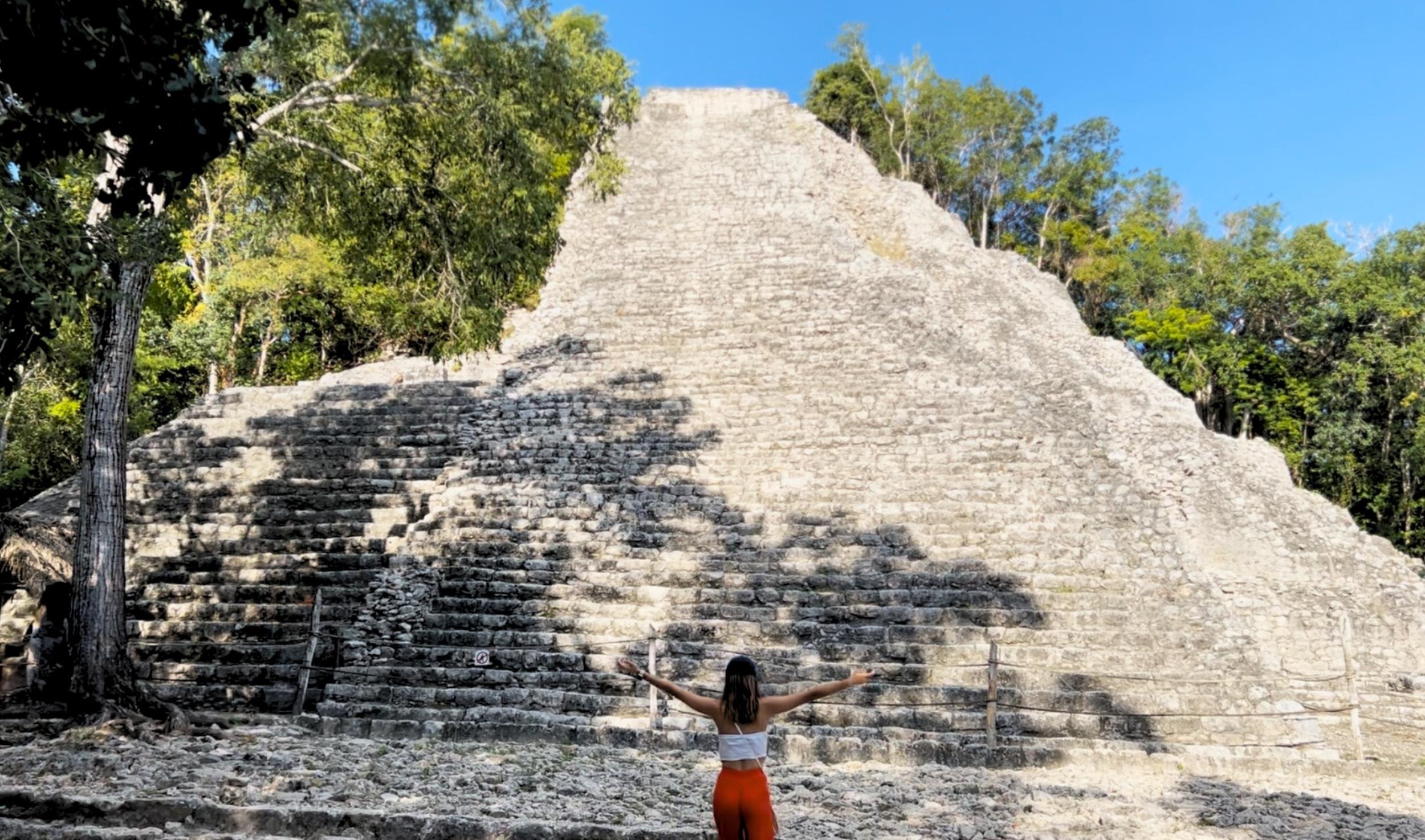
Most travelers deciding between a tulum ruins and cenote swim day and a Coba excursion choose Tulum for its coastal setting and easy pairing with a nearby cenote, while Coba wins out for visitors who want a climbable pyramid deep in the jungle.
|
Top pick Tulum Ruins |
Coba Archaeological Zone | |
|---|---|---|
| Site size and layout | Compact, cliff-top, walkable in under an hour | Sprawling jungle site, multiple plazas |
| Pyramid climbing allowed | — | ✓ (Nohoch Mul, 42 m) |
| Distance from Tulum town | 5 minutes by car or taxi | 45–60 minutes by car |
| Typical cenote pairing | Cenote Calavera or Cenote Cristal nearby | Cenote Choo-Ha or Multum Ha |
| Crowd levels | Heavy, especially with cruise-ship groups | Lighter, spread across the site |
| Duration needed | 1–1.5 hours for the ruins alone | 2–3 hours including pyramid climb |
| See tickets & prices |
Verdict: Choose Tulum for ocean views and quick access to a cenote swim, choose Coba if climbing a Maya pyramid matters more to you than a coastal backdrop.
Hand-picked experiences loved by thousands of travelers
12 hours
Free Cancellation
Visit an ancient Wonder of the World, swim in a jungle cenote, and explore a charming colonial town—all in one day
6 hours
Free Cancellation
Venture deep into the Mayan jungle to swim in three hidden cave cenotes, then share a homemade feast
12 hours
Free Cancellation
Discover two ancient cities, swim in a jungle cenote, and experience authentic Mayan traditions on this immersive day tour.
1 hour 15 minutes to full day
Free Cancellation
Discover ancient Mayan ruins perched on dramatic coastal cliffs with an expert guide
11 hours
Free Cancellation
Full-day journey through two legendary Maya sites, refreshing cenote dip, and authentic regional lunch
10 hours
Free Cancellation
Journey through Mayan history at coastal ruins, then swim in five pristine cenotes hidden in the jungle
5 hours
Free Cancellation
Experience an action-packed day combining ancient Mayan rituals with heart-pounding ziplines, underground cenote exploration, and off-road ATV riding through tropical wilderness.
2 hours
Free Cancellation
Fast-track archaeological tour combined with guided ocean snorkeling in a protected marine zone
You arrive at the federal entrance on Carretera 307 at 08:15, forty-five minutes before the tour buses. The 95 MXN admission grants access to the archaeological zone; your cenote swim is typically bundled in the tour package you selected.
You walk the 800-meter paved path from the ticket booth — electric shuttles run every ten minutes for 50 MXN if preferred — and enter through the restored archway in the northern defensive wall.
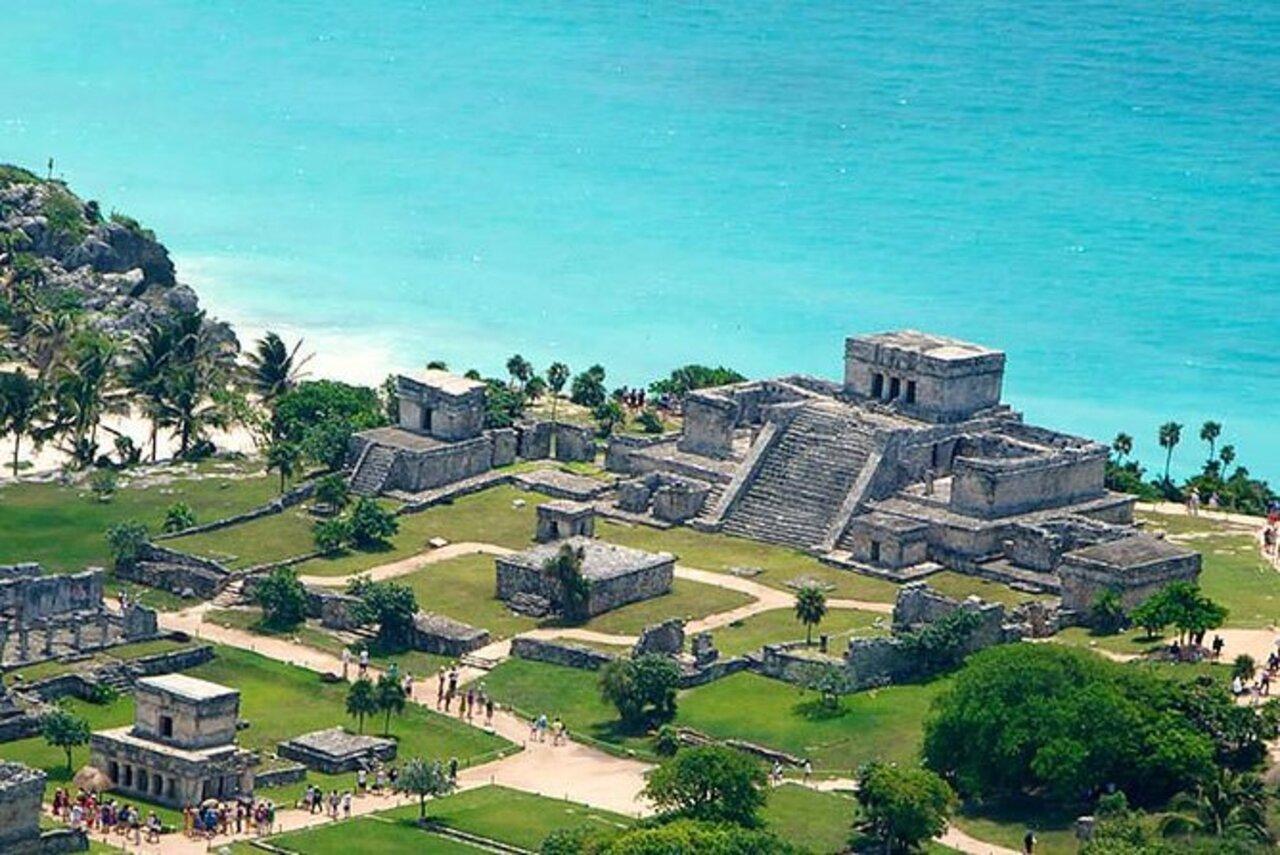
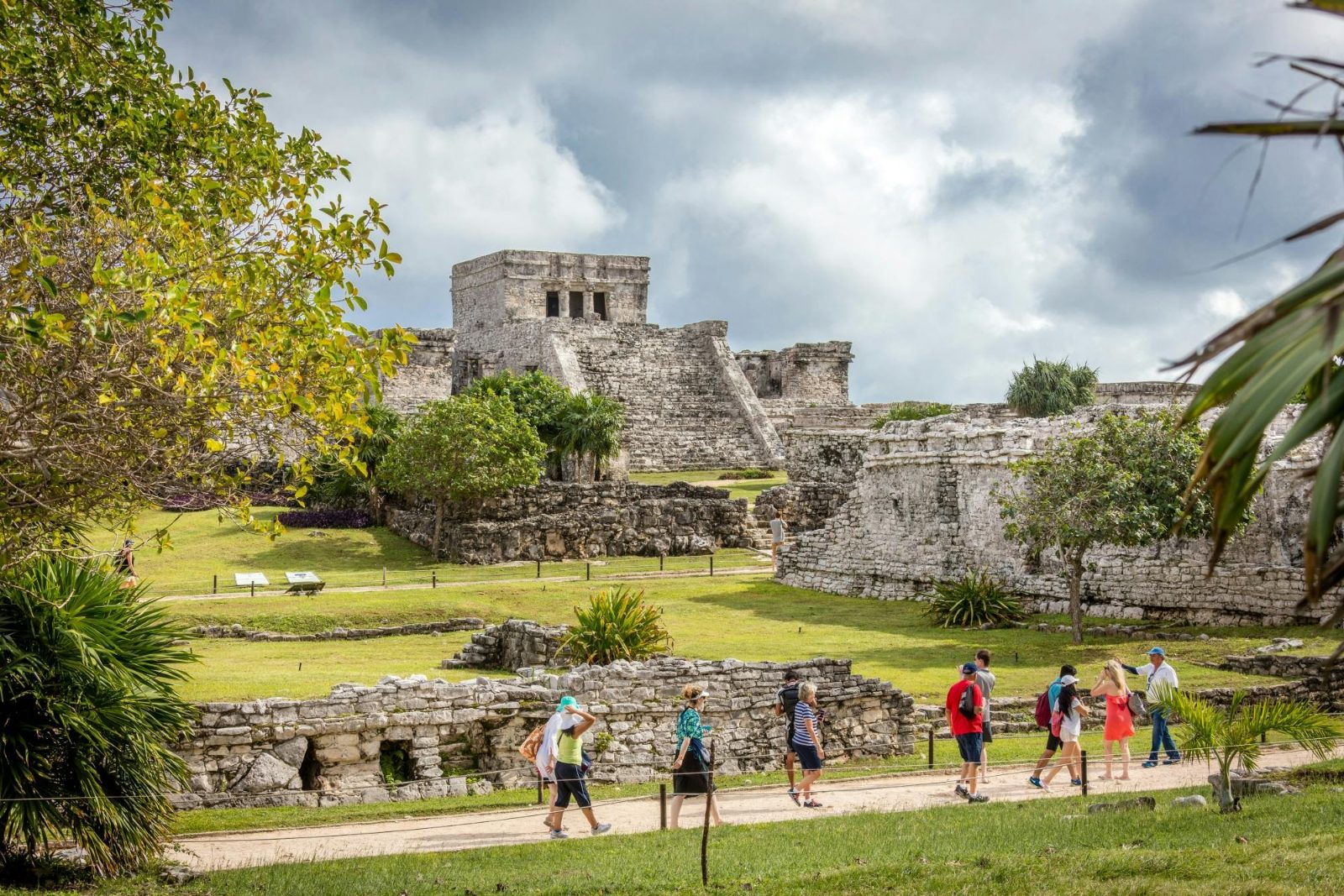
You trace the perimeter wall south to El Castillo, where the morning sun illuminates the temple's western facade. From the viewing platform you count twelve structures within the walled precinct, each labeled with weathered plaques in Spanish and English. The Temple of the Frescoes sits thirty meters east; you peer through the rope barrier at faded red and blue pigments on the interior walls. You descend the fifteen stone steps to Playa Ruinas, the narrow beach below the cliffs, and photograph the ruins from sea level before the crowds arrive.
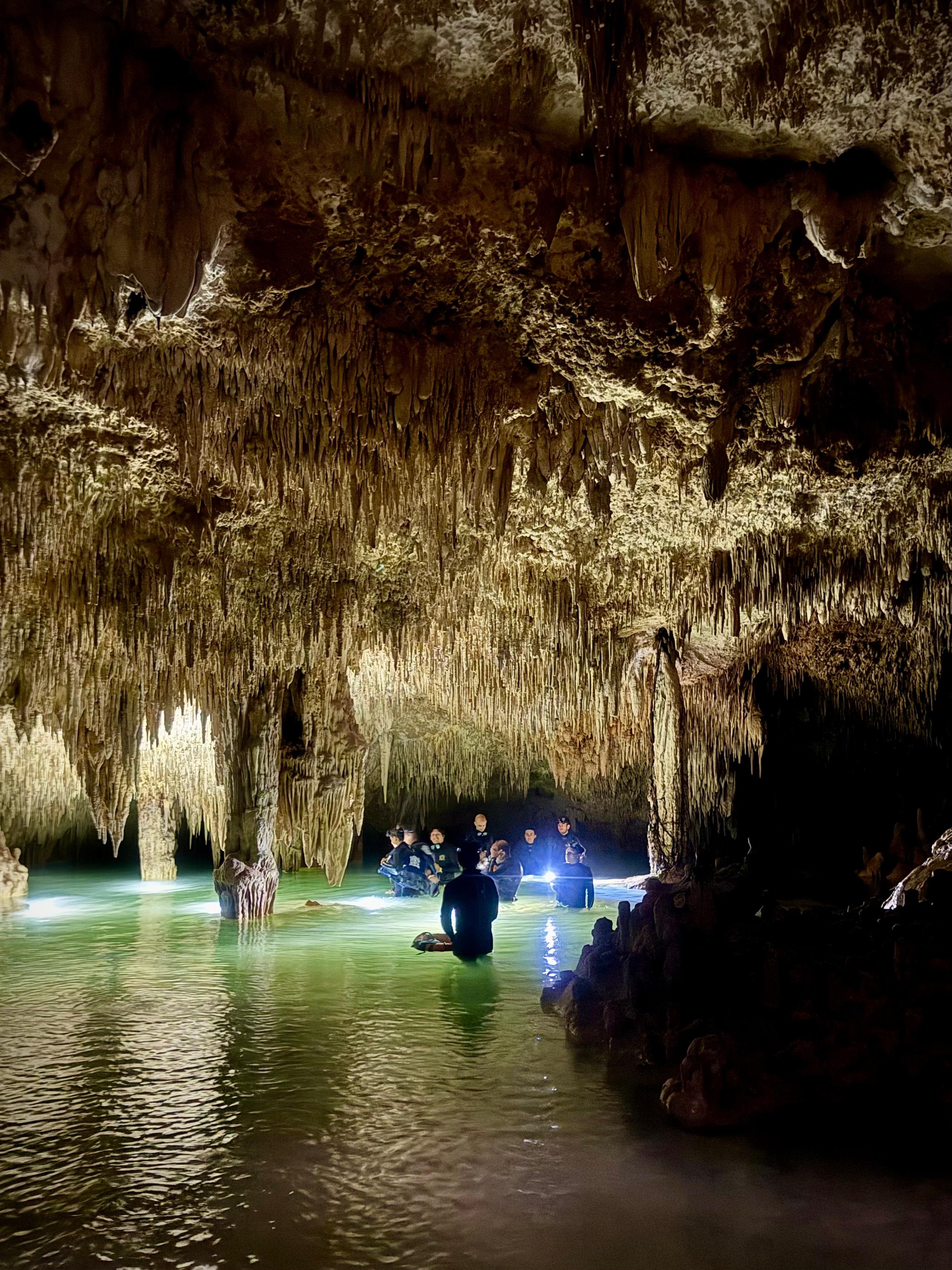
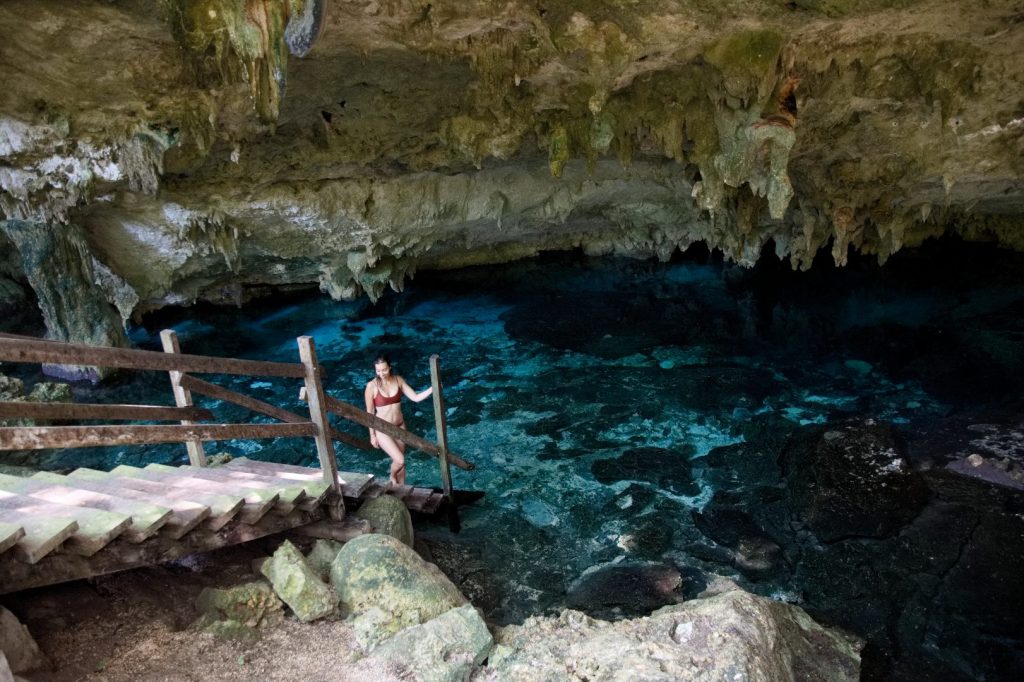
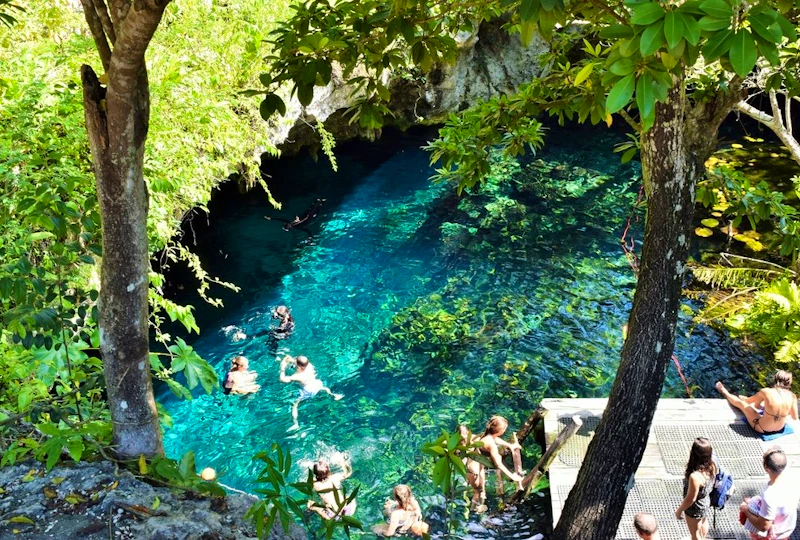
Your guide leads the group inland to Cenote Mariposa or Gran Cenote, depending on your selected tour. You descend wooden stairs into the open-air pool, where limestone formations and submerged tree roots frame the turquoise water. You swim for thirty minutes in the 25°C spring-fed basin, mask and snorkel provided, before returning to the archaeological zone or continuing to Playa del Carmen.
All the details about your upcoming adventure in one place
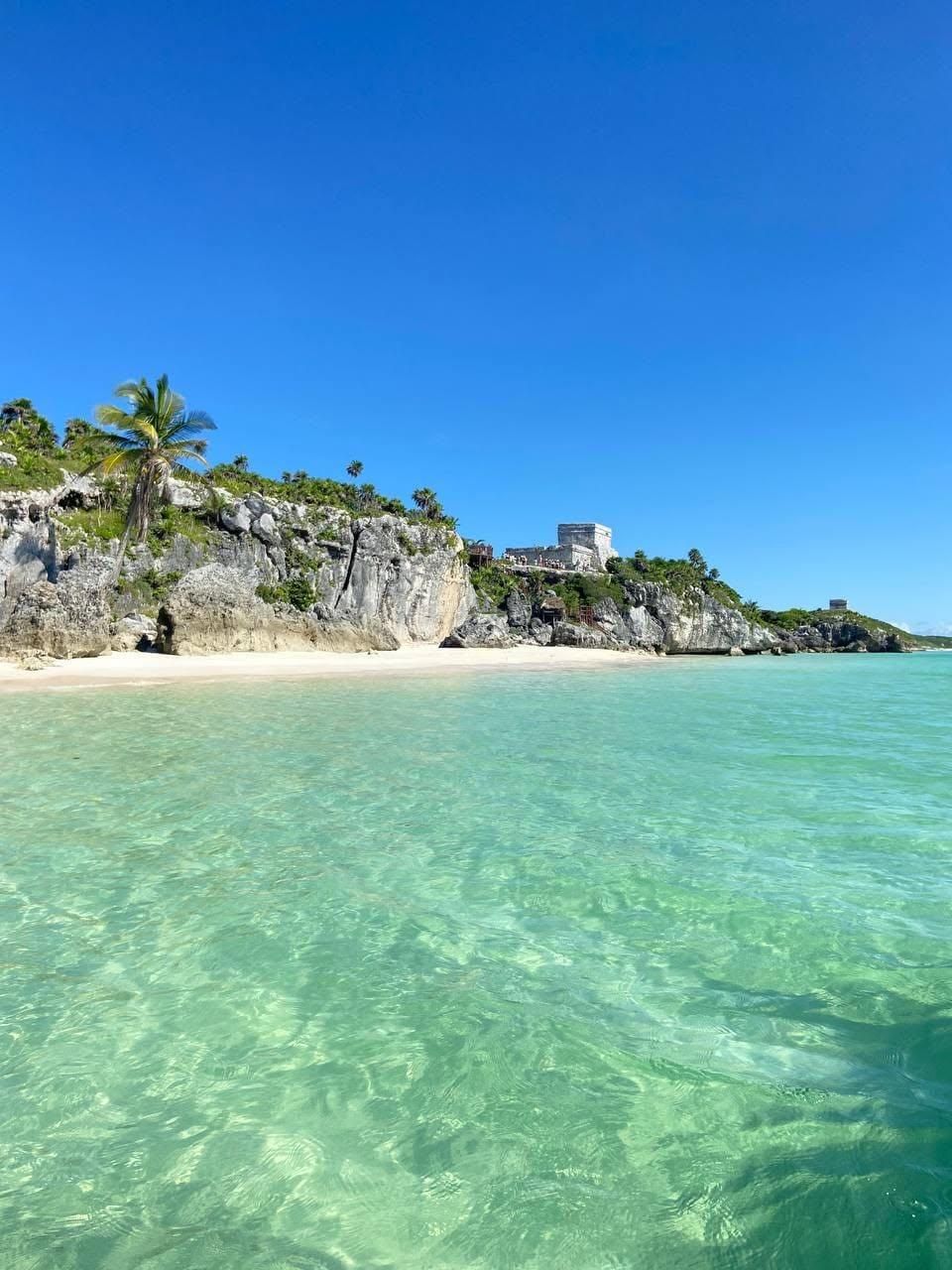
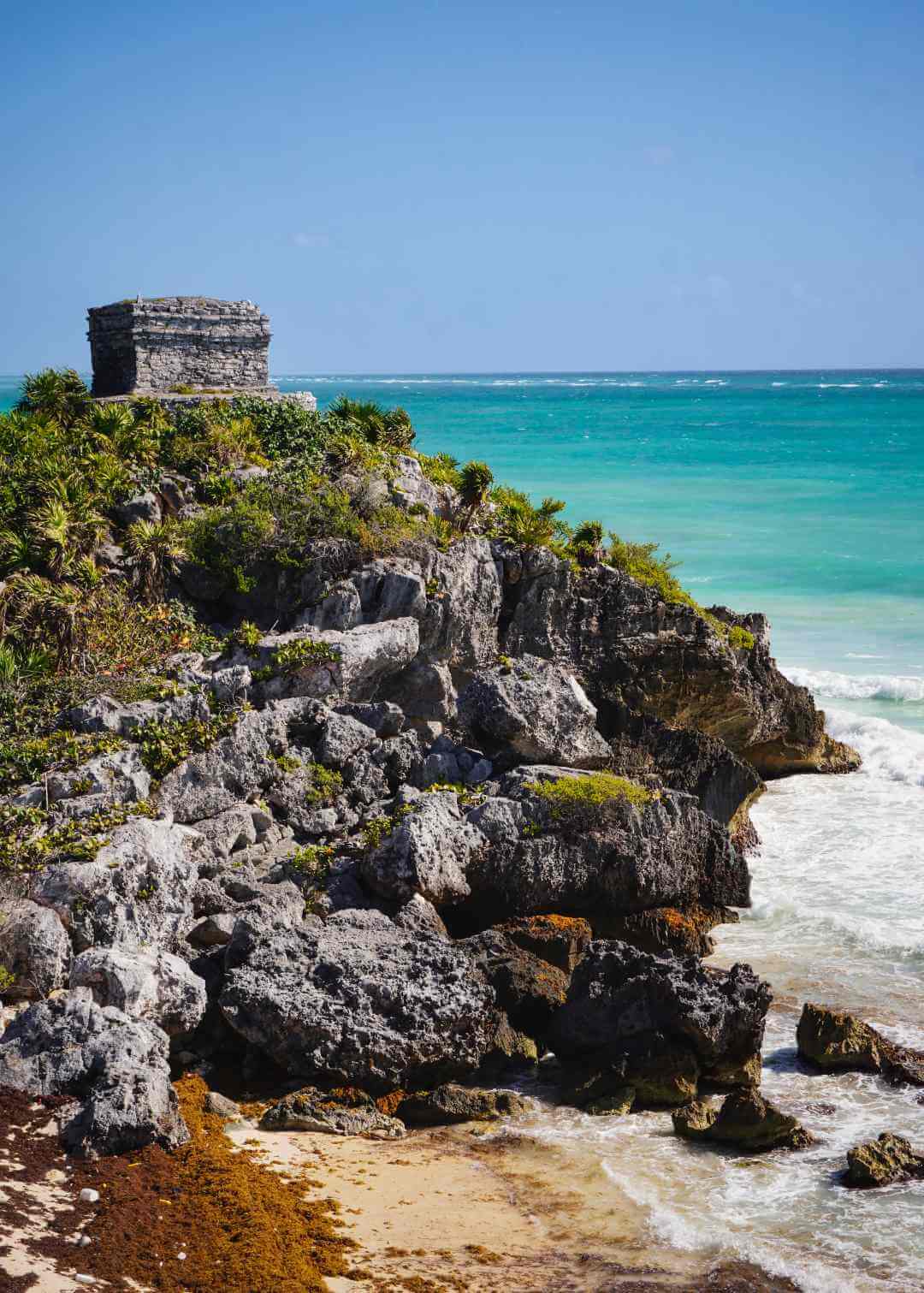
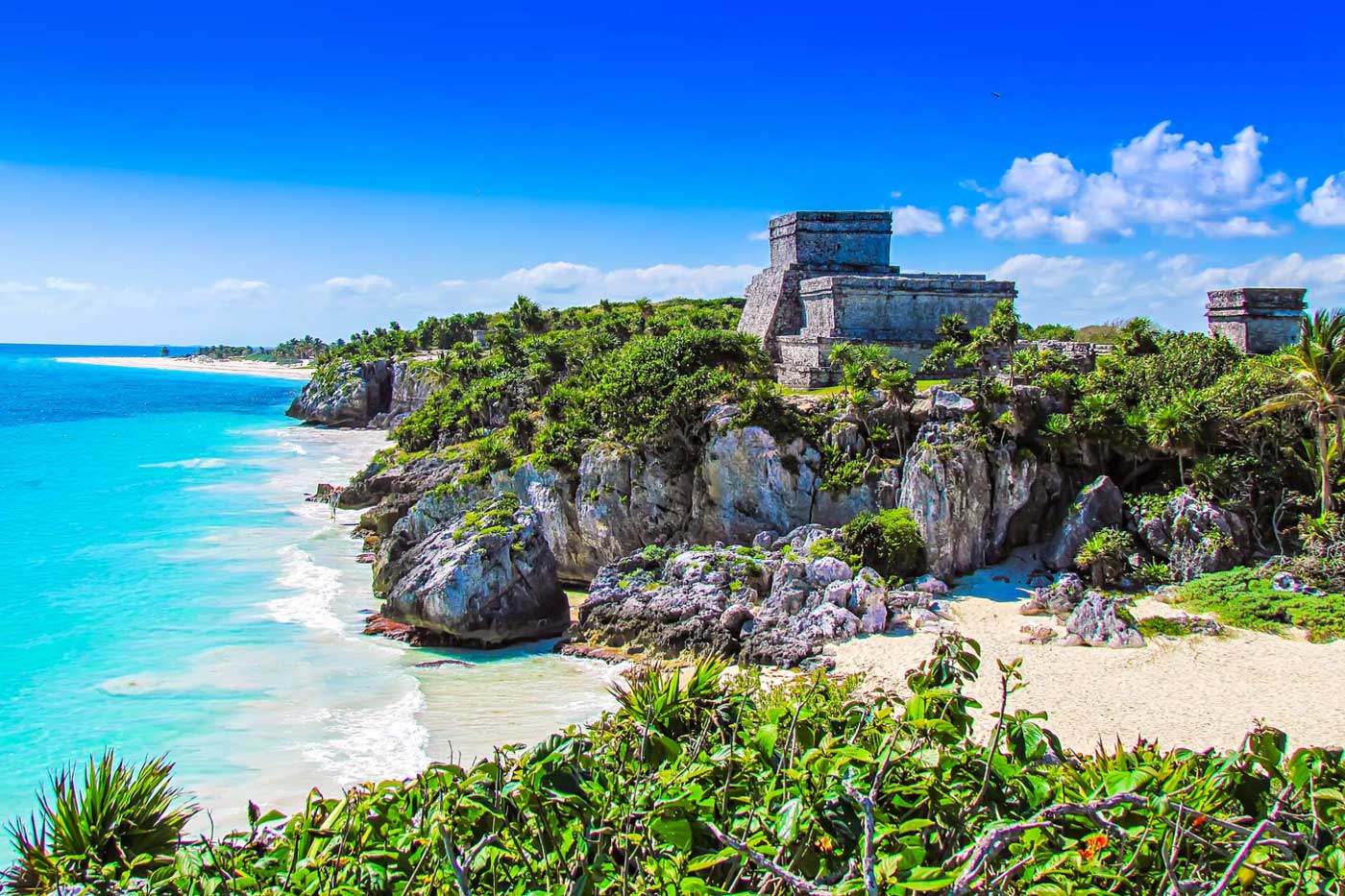
The fortified city of Tulum stood as the only Maya settlement built directly on the Caribbean coast, its limestone temples positioned thirteen meters above turquoise water on a natural limestone bluff.
Constructed between 1200 and 1450 CE during the Late Postclassic period, the site served as a major port for Cobá, controlling maritime trade routes that extended from the Yucatán Peninsula to present-day Honduras. El Castillo, the central pyramid temple, functioned as both a ceremonial center and a navigational lighthouse — its two windows align precisely with the winter and summer solstices, creating light beams visible to seafaring traders.
Today, Tulum Archaeological Site operates as one of Mexico's most-visited heritage zones, receiving over 2.3 million annual visitors who arrive for both the clifftop ruins and the cenote systems that riddle the surrounding jungle. The region holds more than 6,000 documented cenotes — sinkholes formed by limestone bedrock collapse — many connecting through subterranean rivers that the ancient Maya considered sacred portals to Xibalba, the underworld. Cenote Mariposa and Gran Cenote, both within twenty minutes of the archaeological zone, preserve water temperatures of 24–26°C year-round, fed by the world's longest underground river system at 347 kilometers.
The Temple of the Frescoes retains interior murals depicting the Maya rain god Chaac and the descending god motif unique to Tulum's iconography — a stucco figure positioned upside-down above the temple's central doorway, interpreted by archaeologists as either a representation of the setting sun or the bee god. The site's defensive wall, three to five meters thick and stretching 400 meters on the landward side, enclosed an elite residential and ceremonial precinct of approximately sixteen structures, while the majority of Tulum's estimated 1,000–1,600 inhabitants lived in perishable wood-and-thatch dwellings beyond the walls. Conservation work conducted by INAH since 1938 has stabilized the structures using period-accurate lime mortar techniques, though visitor access to interior chambers remains restricted to preserve the fragile pigments and stucco work that survived five centuries of tropical weathering.
The ancient Maya considered cenotes sacred portals to Xibalba, the underworld.
Dress for comfort and weather. No specific dress code applies.
Bags are subject to security screening. Large suitcases and oversized backpacks are typically not permitted.
Personal photography is permitted. Flash, tripods, drones, and professional equipment require permission.
Family-friendly. Strollers are welcome in most experiences; baby carriers recommended for busy sites.
Step-free access is available at most experiences. Check individual tickets for specific accessibility notes.
On-site food and beverage options are typically available. Outside food is usually not permitted indoors.
Duration
Varies by experience
Opening hours
09:30 – 18:00
Getting there
City-center access via metro and bus
Accessibility
Most experiences are wheelchair-friendly — check individual tours
What to bring
Comfortable shoes, water, phone for mobile voucher
Cancellation terms vary by ticket type and partner. Each ticket option lists its specific cancellation window and refund policy.
Recommended time
3-4 hours
A balanced tulum ruins and cenote swim experience typically requires 3 to 4 hours to comfortably navigate the clifftop structures and allow for travel time to a nearby water feature. We recommend the 08:00–09:30 arrival window to secure the best light and avoid the heavy influx of tour buses that arrive by mid-morning. Those booking tulum ruins and cenote swim tours should plan for a more structured pace, while independent visitors may wish to allocate extra time for cooling off after walking the archaeological site. Securing your tulum ruins and cenote swim tickets in advance helps maintain a smooth transition between your morning exploration and your refreshing afternoon dip.
Crowd levels through the day
Tulum rose during the Postclassic period as Zamá—"City of Dawn"—a walled fortress commanding the Caribbean coast from limestone cliffs. Founded around 1200 CE, it served as one of the last great Maya cities, thriving as a maritime trading hub when inland centers like Chichén Itzá had already declined. Merchants navigated canoes loaded with jade, obsidian, cacao, and turquoise through coastal routes linking the Yucatán Peninsula to Honduras, making Tulum a critical node in the Mesoamerican exchange network. The site's defensive walls, rising five meters and stretching 380 meters along the landward side, protected not just ceremonial structures but warehouses and elite residences. El Castillo, the pyramid overlooking the sea, functioned as both temple and navigational beacon—its twin columns framing the entrance aligned with sunrise during equinoxes, guiding seafarers through the barrier reef. Spanish chronicler Juan Díaz documented Tulum in 1518, describing a city "as large as Seville" with watchtowers and painted murals visible from ships. By 1544, disease and colonial disruption had emptied the settlement, though Maya communities continued ritual pilgrimages to the coastal shrines until the 19th century. Rediscovery came in 1841 when John Lloyd Stephens and Frederick Catherwood published illustrations showing frescoes inside the Temple of the Frescoes, sparking archaeological interest. Excavations beginning in the 1920s revealed construction phases spanning three centuries, with Structure 25's murals depicting the rain god Chaac and celestial serpents in vivid blue and red pigments. The cenote beneath the ruins, Gran Cenote, held ceremonial significance as a portal to Xibalbá, the Maya underworld, where offerings of jade and copal resin were deposited. Today, visitors combining tulum ruins and cenote swim tours access both the clifftop temples and underground water systems that sustained the ancient port, experiencing the landscape as traders and priests once knew it—waves breaking against the rocks below, freshwater sinkholes carved through porous limestone above.
Tulum founded as Zamá, a fortified coastal trading port during the Maya Postclassic period.
City reaches peak population, controlling jade and obsidian trade routes across the Caribbean.
Spanish expedition led by Juan Díaz first documents Tulum from the sea, noting its scale and defenses.
Colonial diseases and Spanish conquest force abandonment of the city, though ritual use continues.
Explorers Stephens and Catherwood publish drawings of Tulum's murals, introducing the ruins to European audiences.
Archaeological excavations begin, revealing construction phases and ceremonial cenote connections.
Site opened to public tourism; preservation efforts initiated as visitor numbers climb.
Tulum declared UNESCO World Heritage Site as part of the Sian Ka'an Biosphere Reserve.
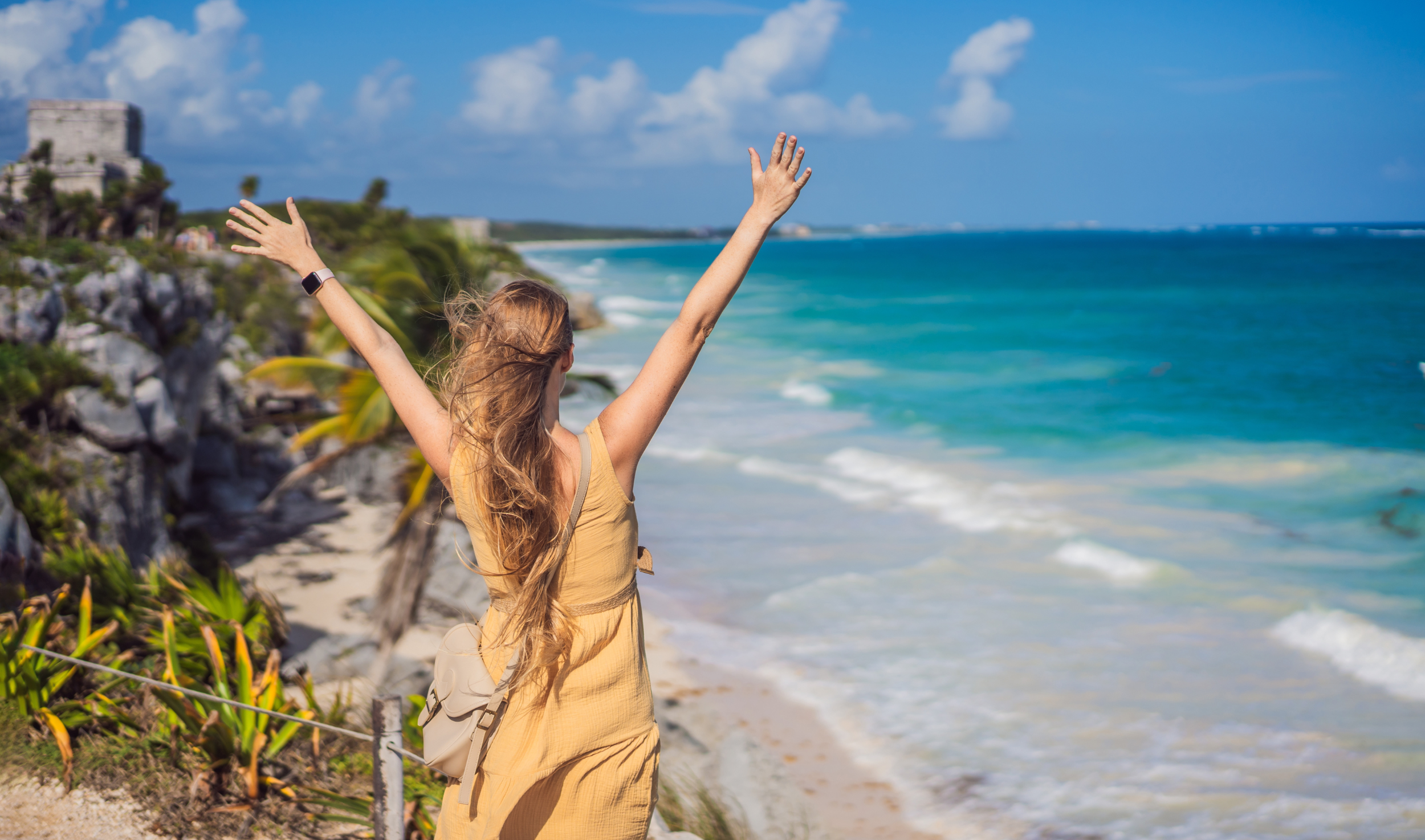
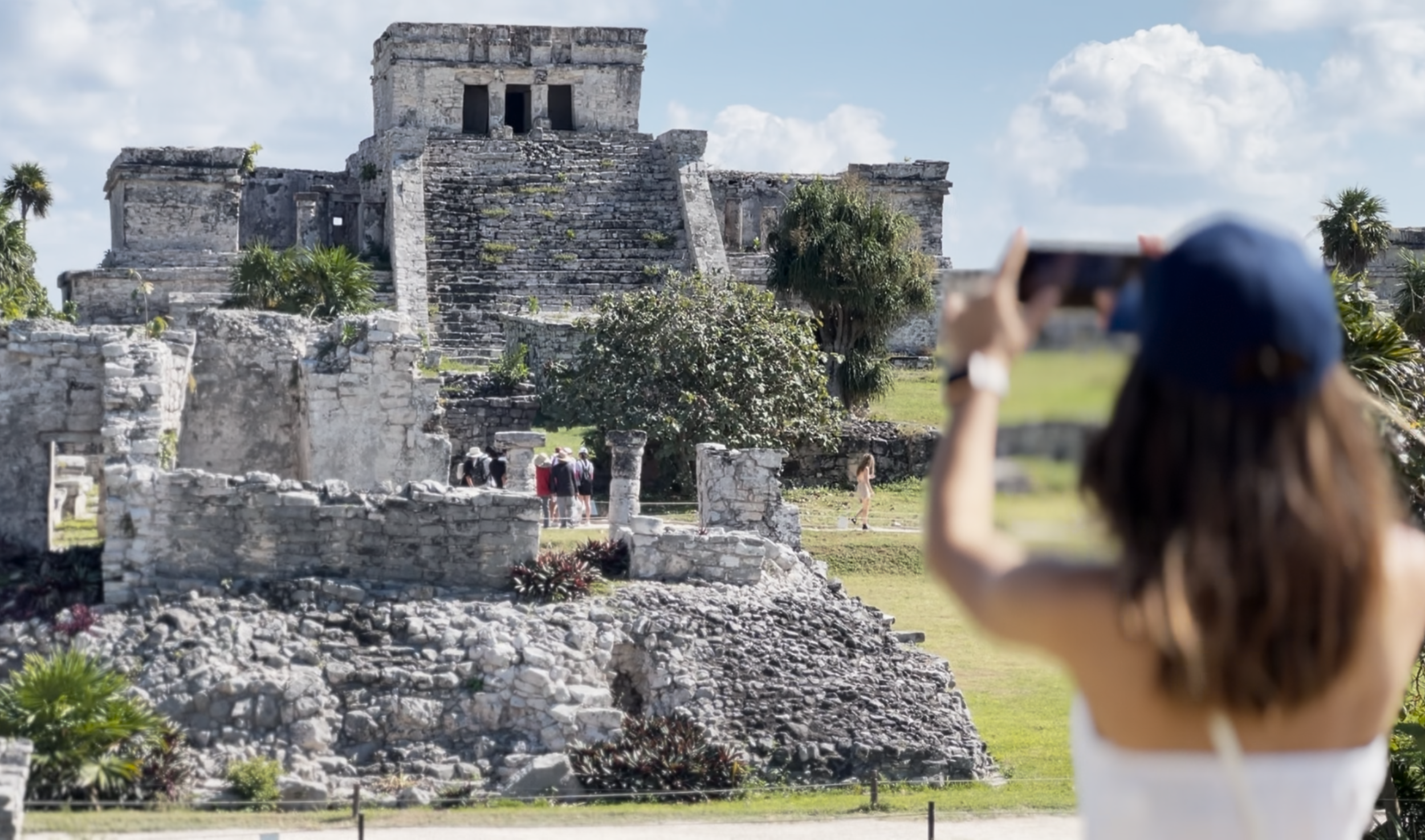
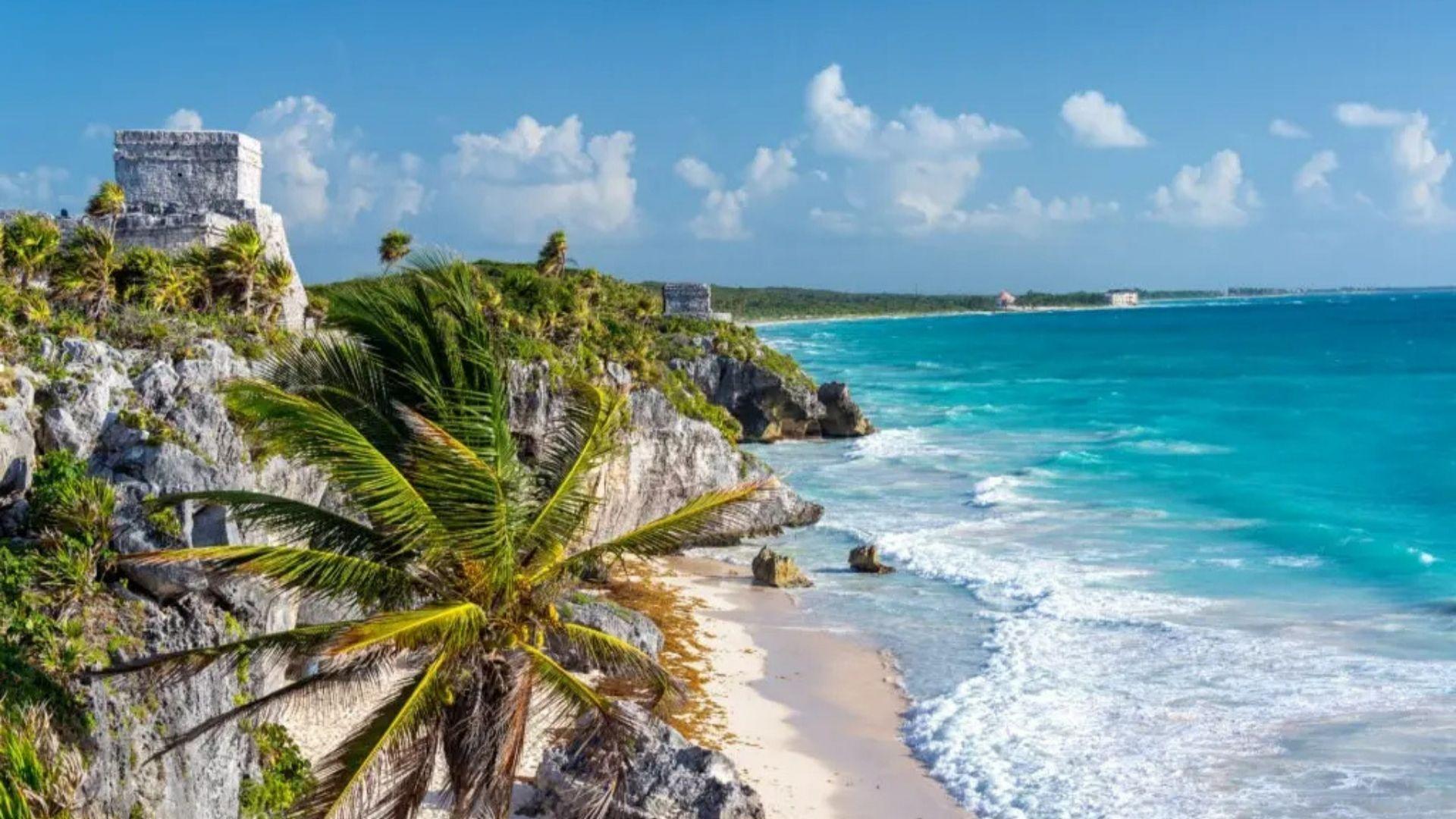
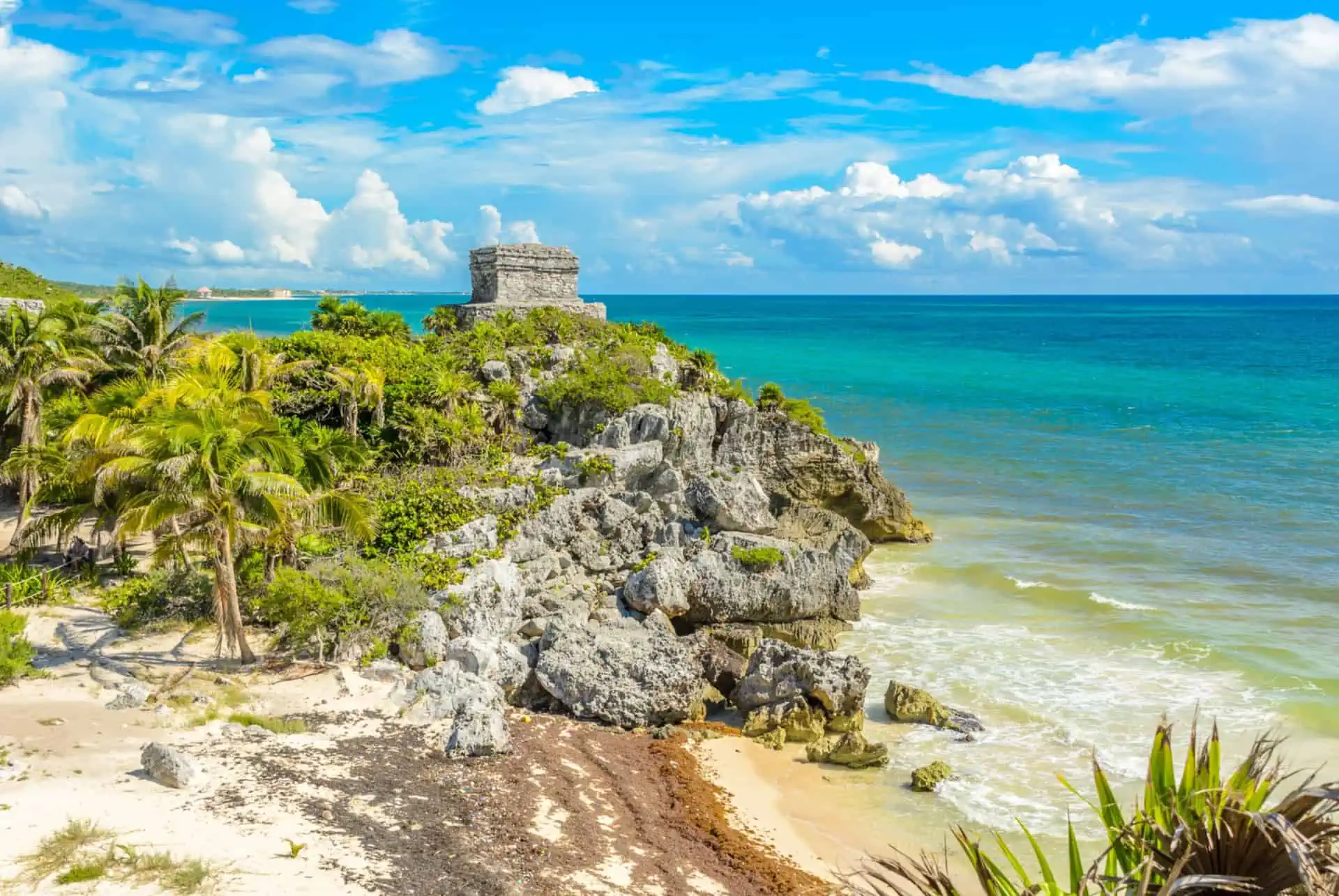
The classic angle: El Castillo's stone temple rising above the sea cliff, framed by palms along the sandy path down to the beach. Stand near the base of the wooden staircase where the trail opens toward the water for the clean, unobstructed view most travelers picture on a tulum ruins and cenote swim visit.
A tulum ruins and cenote swim day works well for kids because it splits naturally into a shaded history walk and a cool-off reward, but the archaeological site itself has almost no shade, so pacing matters more than distance.
Paths are flat, packed limestone or sandy in spots, so strollers roll but jostle a bit; many families use a soft carrier for kids under 3 instead, since sandy patches near the cliff edge can bog down wheels.
Kids from about 5 up handle the exposed ruins walk and cenote swim combo comfortably in under two hours; toddlers do fine too if you cut the ruins portion short and prioritize the swim as the main event.
Restrooms sit near the main entrance and visitor center, but there is no formal baby-change table on site, so pack a portable changing mat if traveling with an infant.
Do the ruins first while everyone is fresh, then treat the cenote swim as the payoff; kids' energy and patience for reading placards drops fast once the midday sun hits the limestone paths.
Bring hats, reef-safe sunscreen, and a refillable water bottle per child, since the ruins have essentially zero tree cover and the walk back from the beach area adds extra sun time.
Skip packing heavy snacks for the ruins leg; save real eating for after the swim when kids are hungrier and calmer, closer to the entrance plaza.
Dining options directly within the Zona Arqueológica de Tulum are limited, making it wise to plan your meal near a tulum ruins and cenote swim excursion. Most visitors prefer to grab refreshments on the adjacent highway or at the nearby shopping plaza before or after completing their visit.
Located a short walk from the cliffside, this venue serves fresh seafood and cold drinks for those needing recovery after tulum ruins and cenote swim tours.;Restaurante Los Arrecifes
Join thousands of happy travelers who have discovered this incredible experience
Book Your Experience Now