
Quick answer
The Tulum ruins were built around AD 1200–1450 during the Late Postclassic period, when the site served as a fortified trading port called Zamá. The city remained occupied through the Spanish arrival in 1518 and was one of the last Maya settlements to resist colonization, finally abandoned by 1544. Archaeological evidence shows the site was rediscovered in 1841 by explorers John Lloyd Stephens and Frederick Catherwood, though local Maya communities had maintained knowledge of its location.
Tulum was constructed later than most major Maya cities, emerging during a period when centralized power had fractured across the Yucatán Peninsula. The name Zamá—meaning "dawn" or "sunrise" in Yucatec Maya—reflects its position on the eastern coast, where the city's inhabitants watched the sun rise over the Caribbean each morning. Unlike inland ceremonial centers such as Chichén Itzá or Uxmal, Tulum functioned primarily as a port and trading node, exchanging obsidian, jade, and cacao along coastal and riverine routes that connected the peninsula to Central America. The city's defensive walls—some of the few built by the Maya—enclosed three sides of the settlement, with the Caribbean forming a natural barrier on the fourth. These fortifications suggest Tulum's builders anticipated external threats, likely from rival city-states or maritime raiders. The presence of later-style architecture and murals depicting figures in both Maya and Central Mexican dress points to cultural exchange and influence from distant regions during the site's peak occupation. When Spanish explorers first sighted the walled city in 1518, Tulum was still inhabited and functioning. The expedition led by Juan de Grijalva noted its plastered buildings and ceremonial activity visible from the sea. Unlike many inland cities already in decline, Tulum persisted for decades after initial contact, sustained by its coastal trade network and relative isolation. Disease, economic disruption, and Spanish incursions gradually eroded the population, and by the mid-16th century the site had been abandoned. The jungle reclaimed the structures until the 19th century, when explorers documented the ruins and sparked archaeological interest that continues today. Understanding the tulum ruins history provides context for the architectural choices visible across the site—compact temples, residential platforms, and the clifftop placement of El Castillo, which served as both a lighthouse and ceremonial center. The city's timeline reflects resilience and adaptation, qualities that allowed it to survive longer than most of its contemporaries in a rapidly changing world.
“Tulum persisted for decades after Spanish contact, sustained by its coastal trade network and relative isolation.”
Tulum Ruins History: From Maya Trade Port to Spanish Contact
Tulum emerged during the Postclassic period of Maya civilization, constructed between the late 13th and early 15th centuries when established powers like Chichen Itza had already declined. Archaeological evidence places its founding around 1200 CE, though major construction peaked between 1400 and 1450 CE under centralized rule from Mayapan. The settlement functioned as a fortified coastal trading hub, its limestone walls enclosing approximately 7.5 hectares on three landward sides while the Caribbean cliffs provided natural defense to the east. Maritime traders navigated through a narrow break in the offshore reef, guiding canoes toward the beach below the central ceremonial precinct. El Castillo, the pyramid that anchors the site today, served dual purposes as temple and navigational landmark, its elevated position visible from distant trade routes. Contemporary Spanish chroniclers documented Tulum as Zamá—"dawn" in Yucatec Maya—referencing its eastern orientation toward the rising sun. The walled compound housed an elite ruling class who controlled exchange networks linking the Yucatan interior with coastal and Caribbean island settlements. Obsidian, jade, turquoise, salt, and cacao moved through its port, while murals inside temples depicted supernatural beings and cosmological scenes rendered in blue pigment. Spanish contact arrived in 1518 when Juan de Grijalva's expedition sighted the fortified settlement from offshore, describing painted buildings visible from the water. Unlike central Mexican cities that fell quickly to conquistadors, Tulum witnessed gradual Maya abandonment after epidemic disease devastated coastal populations through the 16th century. By 1544, the settlement stood largely deserted, though scattered Maya families occupied surrounding areas into the colonial period. Dense jungle reclaimed the structures until American explorer John Lloyd Stephens and British artist Frederick Catherwood documented the ruins in 1841, publishing engravings that introduced tulum ruins history to international audiences. Excavation and stabilization work by Mexican archaeologists began in the early 20th century, continuing through modern conservation efforts by INAH. Visitors walking the site today follow stone pathways where Maya merchants once traded, the original plaster surfaces weathered to gray limestone. El Castillo retains its terraced profile above the beach, while temple doorways frame the same Caribbean horizon that guided ancient navigators inland.
Tulum founded as a small coastal settlement during the Maya Postclassic period, emerging as older centers declined
Major construction phase under Mayapan influence builds El Castillo pyramid, defensive walls, and ceremonial structures that define the site today
Spanish explorer Juan de Grijalva sights the painted settlement from the Caribbean, documenting a thriving fortified port
Epidemic disease and Spanish colonial pressure lead to Tulum's abandonment, ending its role as an active Maya trade center
American explorer John Lloyd Stephens and artist Frederick Catherwood document the overgrown ruins, publishing illustrated accounts that reveal the site to Western audiences
Mexican government archaeologists begin systematic excavation, stabilization, and study under INAH stewardship
Tulum opens to public visitation as conservation work progresses, becoming one of Mexico's most-visited archaeological sites
Ongoing INAH restoration balances preservation with tourism access, protecting structures while accommodating over two million annual visitors
Tulum Ruins History: Common Myths vs Verified Facts
Tulum's dramatic coastal setting and short name invite assumptions that don't match the archaeological record, and popular retellings often blur the site's actual timeline and naming history.
MythTulum was always called Tulum by the people who built it
FactThe name Tulum means 'wall' or 'fence' in Yucatec Maya and was applied after the site's active occupation, likely describing its stone perimeter wall. Researchers believe the original name was Zama, meaning 'dawn' or 'city of dawn', fitting its position facing the sunrise over the Caribbean.
MythTulum is the oldest Maya city in the Yucatan
FactTulum was actually one of the last Maya cities still inhabited, occupied into the period of Spanish contact in the 16th century. Many Maya sites elsewhere in the region, including inland cities, predate it by centuries.
MythTulum was a lost city rediscovered by archaeologists
FactTulum was never truly lost. Its clifftop structures remained visible from the sea, and Spanish expeditions, including one led by Juan de Grijalva in 1518, recorded sighting the site well before modern archaeological survey began.
MythThe walls around Tulum were purely decorative
FactThe wall that gives the site its modern name served a defensive and boundary function, enclosing the ceremonial and administrative core of the settlement. Its presence is central to why later visitors named the site 'Tulum' rather than using its earlier name.
Tulum Ruins History: What to See Among the Structures
Tulum's walled city groups a handful of named structures along the cliff edge and interior plazas, each tied to a specific function in the Postclassic Maya settlement. These are the buildings worth slowing down for as you move through the site.
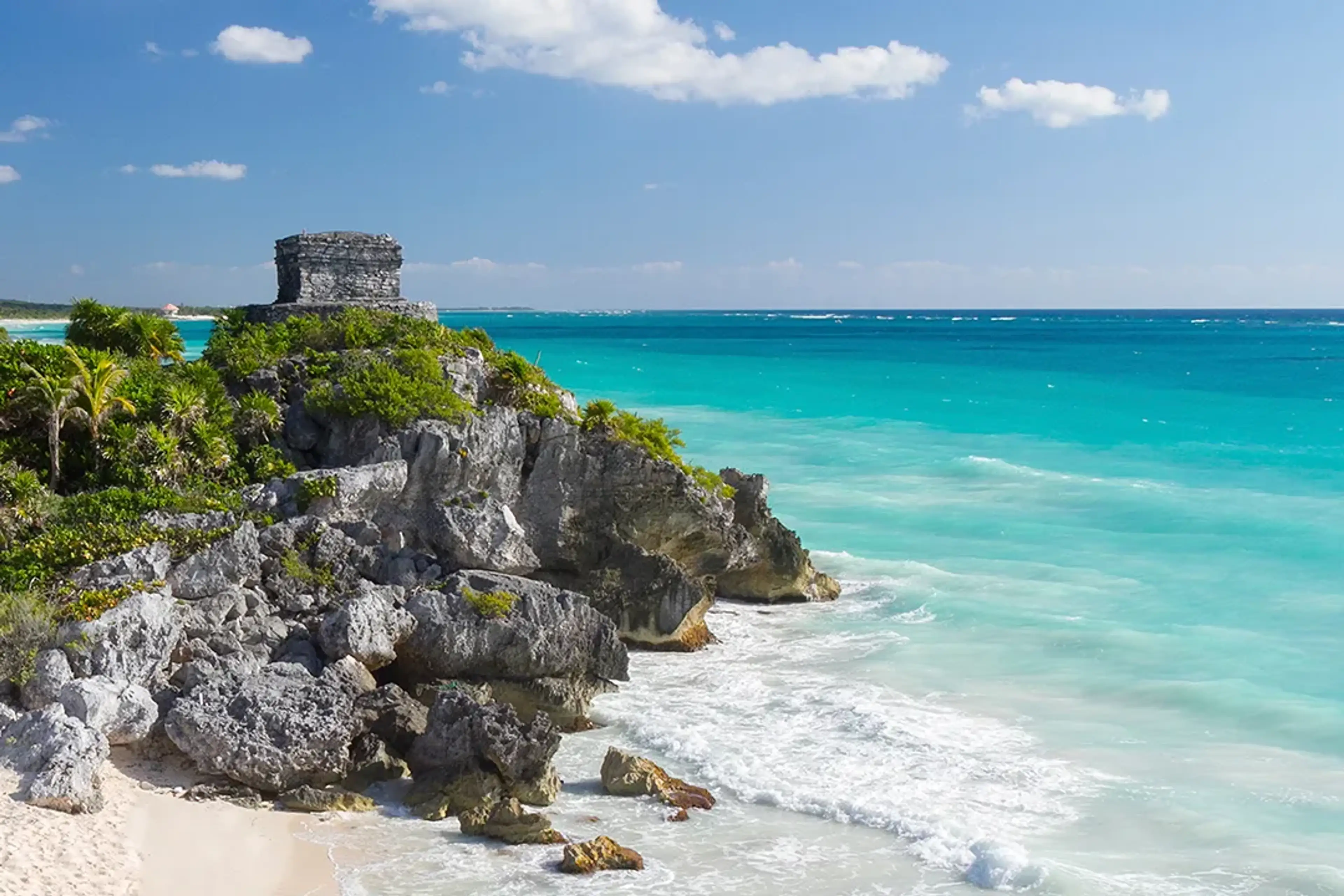
El Castillo
The tallest structure at Tulum, built on the edge of the cliff and thought to have served as both a temple and a navigational landmark for coastal traders.
View from the beach path below at low sun angle.
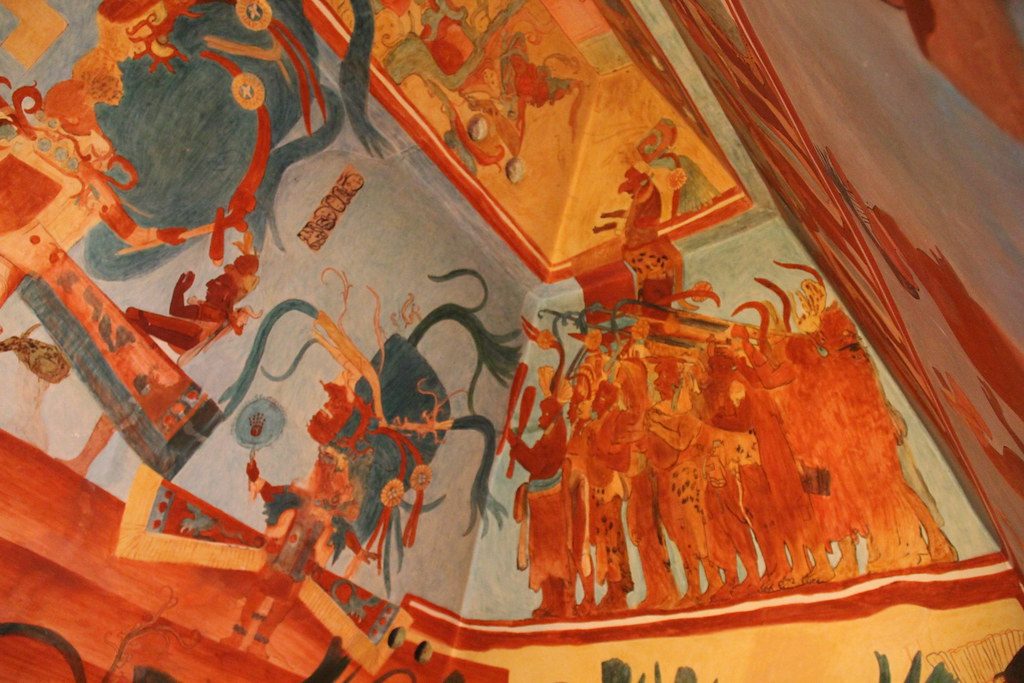
Temple of the Frescoes
A multi-level shrine with interior murals depicting Maya deities and celestial imagery, sheltered under a later-built outer gallery.
Look through the roped-off doorway, not the outer wall.
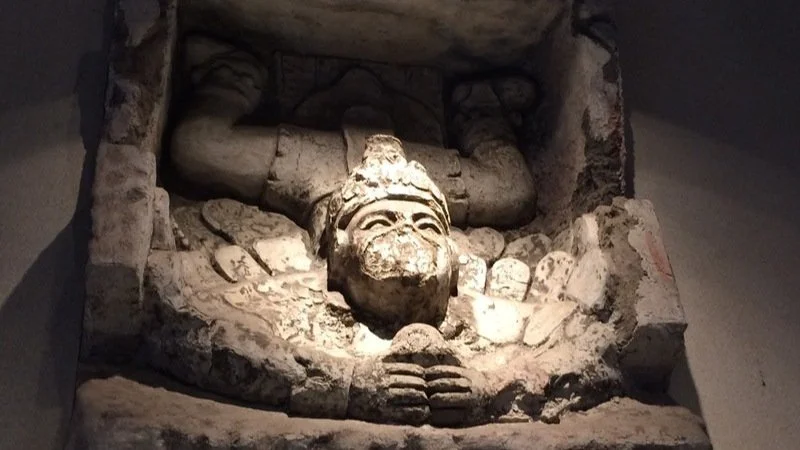
Temple of the Descending God
Named for the carved relief above its entrance showing an inverted figure, a motif repeated at several Tulum buildings.
Check the upper facade carving, easy to miss at ground level.
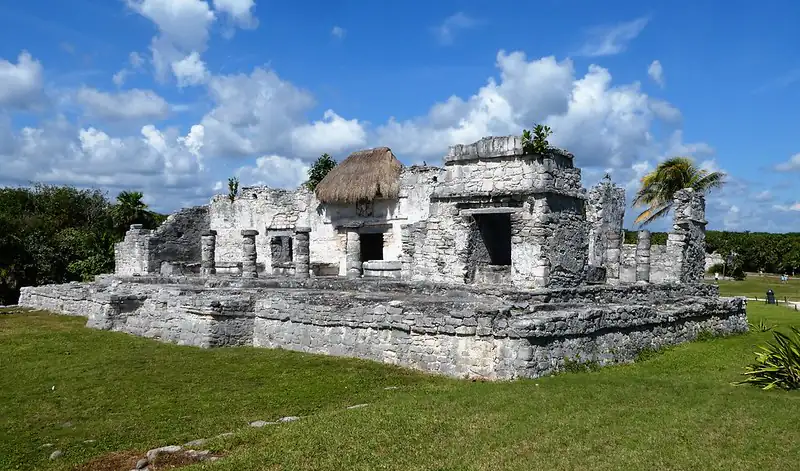
House of the Halach Uinic
Identified as a residence linked to a ruling elite figure, set near the site's central cluster of structures.
Note the modest scale compared to El Castillo nearby.
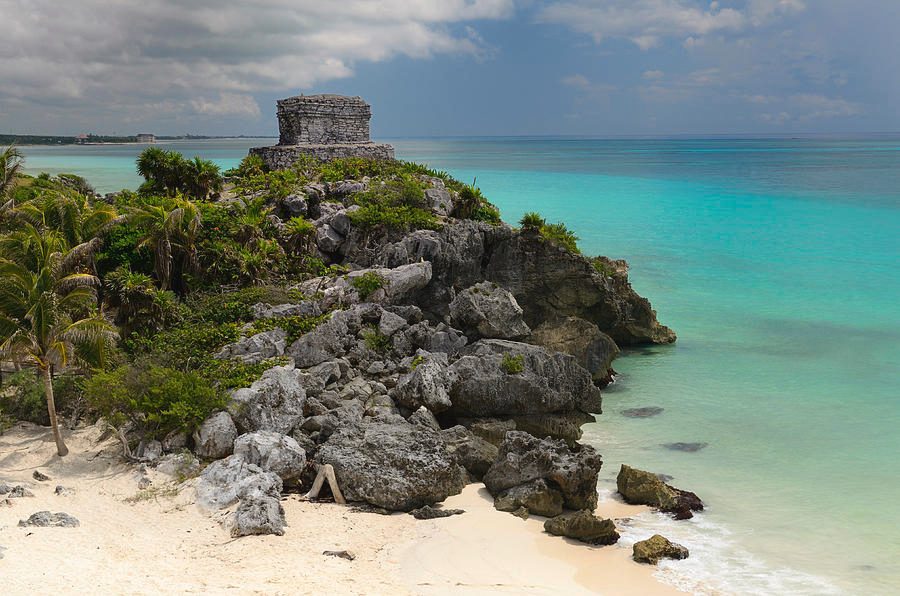
Temple of the Wind
A small single-room structure on a rock outcrop facing the sea, positioned apart from the main plaza.
Best photographed from the northern cliff trail.
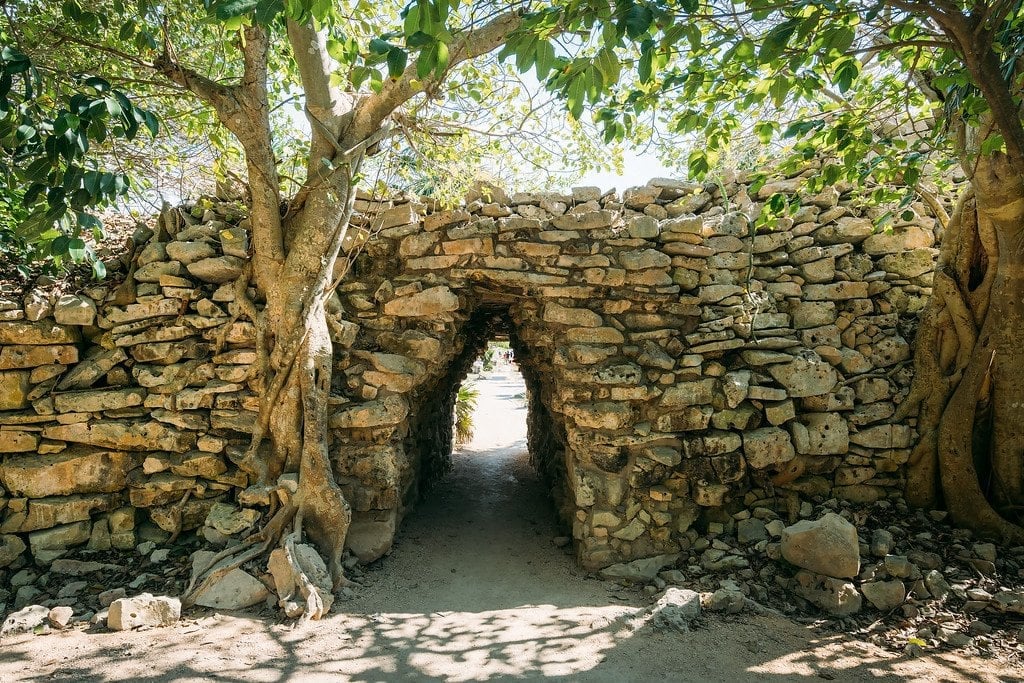
City Wall
The partial defensive wall that gives Tulum its name (Yucatec Maya for 'wall'), enclosing the site's landward sides.
Walk the wall's inner path for the full perimeter view.
How to Get to Tulum Ruins
Tulum Archaeological Site sits on the coastal bluff along the Carretera Federal Cancun-Tulum, in the Zona Hotelera just north of Tulum town. Most visitors arrive by taxi, rental car, or colectivo van, then walk a short stretch from the parking area to the visitor entrance.
Carretera Federal Cancun-Tulum, signed parking lot at the site entrance
Direct from Tulum town center or hotel zone to the site drop-off
Colectivo van along Carretera Federal Cancun-Tulum, request stop near the ruins
Paved walkway from the parking and colectivo drop-off area to the visitor entrance
Tulum Ruins Opening Hours
Tulum Archaeological Site keeps the same schedule every day of the week, with no closing day. Hours run 08:00 to 17:00, Monday through Sunday.
| Monday | 08:00 – 17:00 | |
|---|---|---|
| Tuesday | 08:00 – 17:00 | |
| Wednesday | 08:00 – 17:00 | |
| Thursday | 08:00 – 17:00 | |
| Friday | 08:00 – 17:00 | |
| Saturday | 08:00 – 17:00 | |
| Sunday | 08:00 – 17:00 |
Best Time to Visit the Tulum Ruins History Site
The single best window to enter the Tulum ruins is 08:00 to 09:30, right at opening, since tour buses from Cancun and Playa del Carmen have not yet arrived and the coastal site is still cool before the midday sun sets in. Because gates open at 08:00 every day of the week, this window holds regardless of which day you visit.
08:00-09:30 daily
Smallest crowds of the dayCooler, coastal breeze, low humidity
This is the arrival window to target: the paths along the cliffside and around the main structures are walkable without queuing behind groups, and photos of the site against the Caribbean are largely unobstructed.
09:30-12:00 daily
Building steadily, tour groups arriveWarming quickly, direct sun, high humidity
Large group tours timed from resort pickups tend to land in this window, so pathways narrow and shade at the main structures gets contested.
12:00-15:00 daily
Peak crowds and peak heatHottest part of the day, strong sun exposure
Midday combines the largest visitor volume with the least shade on site, making this the least comfortable stretch for walking the grounds.
15:00-17:00 daily
Thinning out before closingSofter light, temperatures easing
Crowds decline as day-tour groups head back to the coast, though the window before closing is shorter for a full visit.
Verdict: Arrive right at 08:00 and plan to be inside before 09:30, any day of the week, to get the coolest temperatures and the fewest visitors.
Check availability
FAQ: Tulum Ruins History and Visitor Basics
Everything you need to know about tulum ruins history