1 hr 15 min
Tulum Archaeological Zone Walking Tour
- Expert local guide
- Small group
- Skip-the-line access
- Free cancellation
Tulum Ruins Tour — Guided Visits & Reserved Entry
Walk the clifftop fortress where Maya traders watched the Caribbean, fortress walls still standing after seven centuries
Compare fares, pick the fit — all bookings are mobile-voucher and eligible for free cancellation where shown.
1 hr 15 min
8 hr
10 hr
| Experience | Duration | Rating | Skip-the-line | Guide | Small group | Free cancel. | Price | |
|---|---|---|---|---|---|---|---|---|
|
Guided Experience
Most popular
Tulum Archaeological Zone Walking Tour
|
1 hr 15 min | ★ 4.9 | ✓ | ✓ | ✓ | ✓ | $18 | Book → |
|
Guided Experience
Tulum Ruins & Twin Cenotes Half-Day Adventure
|
8 hr | ★ 4.4 | ✓ | ✓ | ✓ | ✓ | $27 | Book → |
|
Guided Experience
Tulum Ruins, Cenote Mariposa & Playa del Carmen Day Trip
|
10 hr | ★ 4.6 | ✓ | ✓ | ✓ | ✓ | €31 | Book → |
Worth it for history and coastal scenery
At 265 MXN, a Tulum ruins tour delivers something no other Mayan archaeological site can match: pre-Columbian temples perched directly above turquoise Caribbean waters. El Castillo, the clifftop pyramid, frames beach views that justify the entrance fee alone. The compact layout means you can tour the entire walled city in 90 minutes, making it efficient for travelers short on time. Arrive between 08:00 and 10:00 to beat cruise-ship crowds and the brutal midday sun. While Chichén Itzá offers grander scale and Coba provides climb-worthy pyramids, Tulum's fusion of coastal panoramas and well-preserved Mayan structures creates a distinct value proposition. The site's historical role as a trading port adds narrative depth to the ocean vistas. For photographers, couples, and first-time visitors to the Riviera Maya, the ruins tour tickets represent solid value. Seasoned archaeology buffs may find the site smaller and less architecturally complex than inland alternatives, but the setting compensates.
Bottom line: The 265 MXN entrance fee buys access to Mexico's most photogenic archaeological site, where Mayan history meets postcard-perfect coastline.
They complement each other; most visitors who do both call Tulum the superior coastal landmark, while Coba offers a deeper exploration into the dense forest canopy. Selecting a tulum ruins tour allows you to focus on iconic Caribbean vistas.
|
Top pick Tulum Ruins |
Coba Ruins | |
|---|---|---|
| Coastal views vs Jungle canopy | Direct Caribbean Sea access | Surrounded by dense forest |
| Walking distance | Compact site layout | Extensive path network |
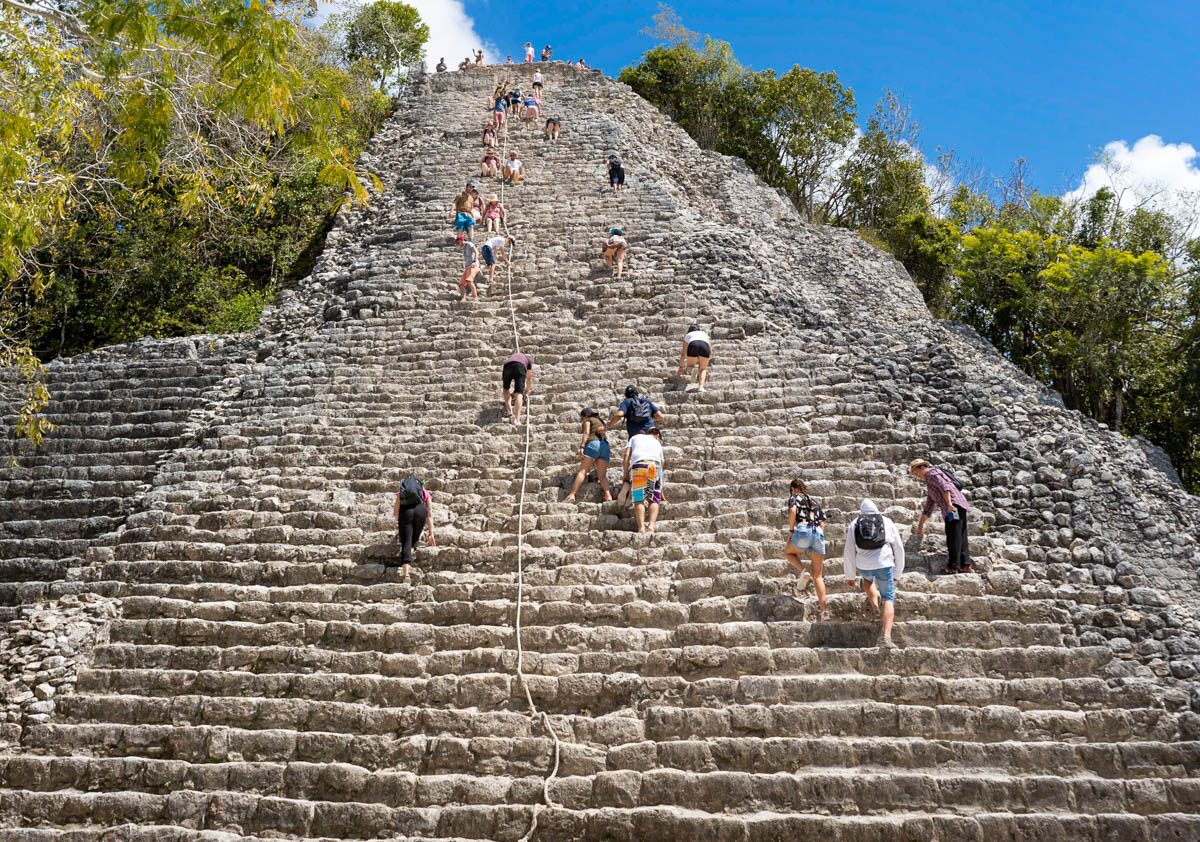
| Climbable structures | None permitted | Nohoch Mul pyramid accessible |
| Proximity to town | Walking distance from town | Over 45 minutes by road |
| Crowd levels | High volume of visitors | Moderate due to larger area |
| See tickets & prices |
Verdict: Choose the Tulum archaeological site for short trips with ocean vistas or opt for Coba tours when prioritizing large-scale pyramid exploration and shaded trails.
Hand-picked experiences loved by thousands of travelers
12 hours
Free Cancellation
Discover ancient Mayan wonders, swim in a jungle cenote, and explore colonial charm on this 12-hour adventure
12 hours
Free Cancellation
Explore two Mayan archaeological sites, swim through underground caves, and savor authentic cuisine
12 hours
Free Cancellation
Discover ancient ruins, swim in a jungle cenote, and participate in authentic Mayan rituals on this cultural adventure
6 hours
Free Cancellation
Swim through three hidden underground cenotes with local guides, then savor authentic home-cooked cuisine
1 hour
Free Cancellation
Snorkel with wild turtles at the reef and photograph ancient clifftop temples from the water
12 hours
Free Cancellation
Discover ancient coastal and jungle temples, swim in a pristine cenote, and connect with Mayan heritage
Flexible - spend as much time as desired
Free Cancellation
Explore a hidden jungle sanctuary blending sacred cenote swimming with striking outdoor art installations
2 hours
Free Cancellation
Walk through ancient temples with a personal guide who brings Maya history to life
Enter the Tulum Archaeological Site to beat the crowds and heat.
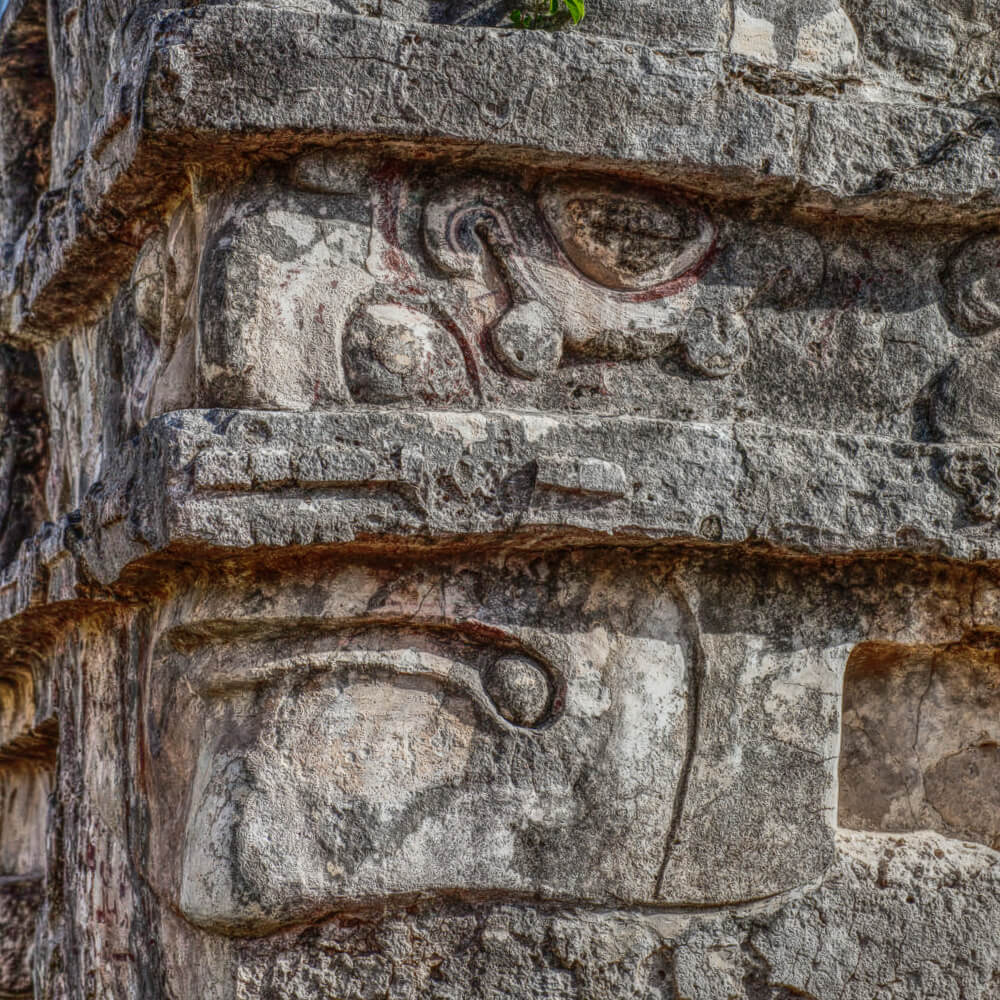
View the intricate murals and wall carvings.
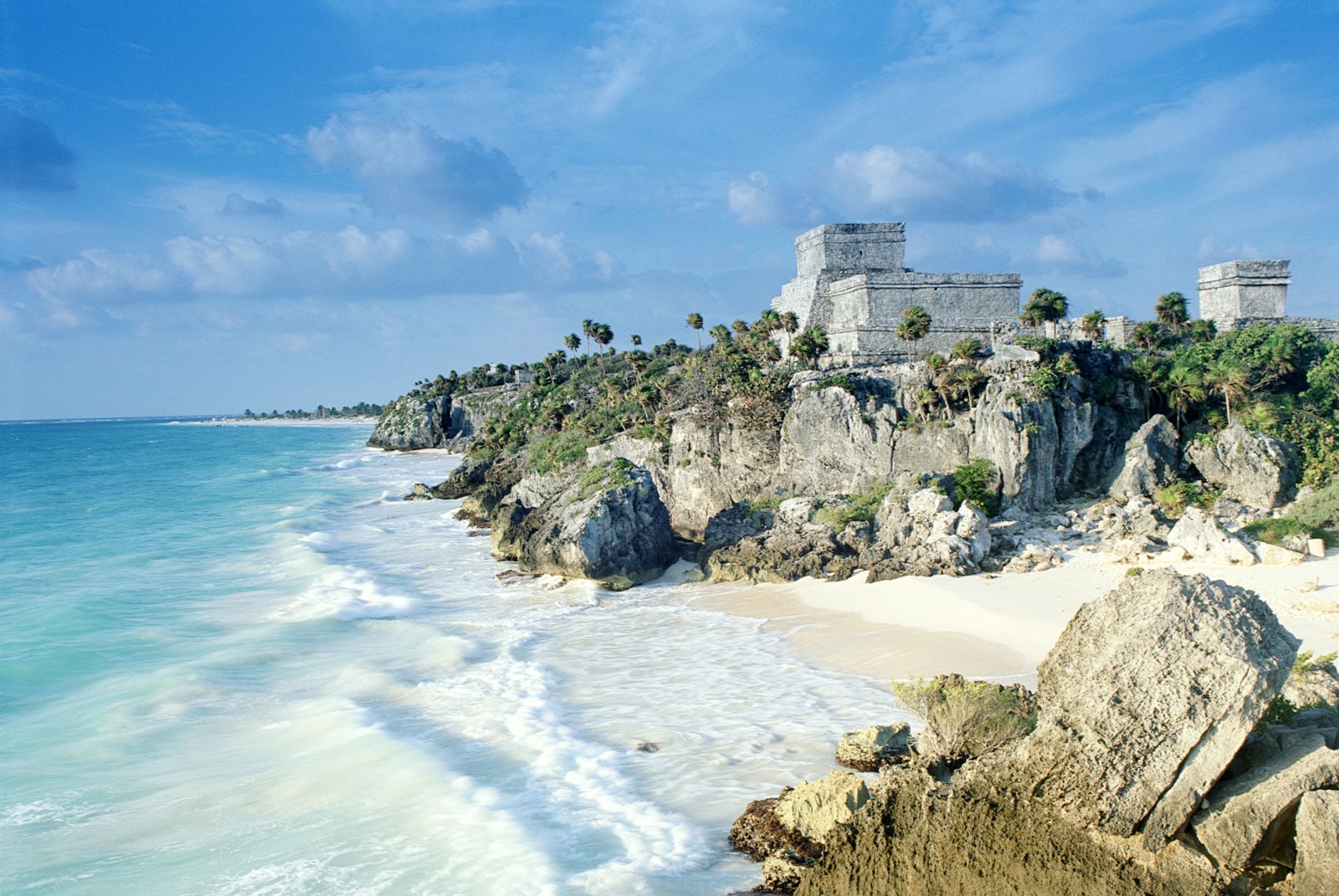
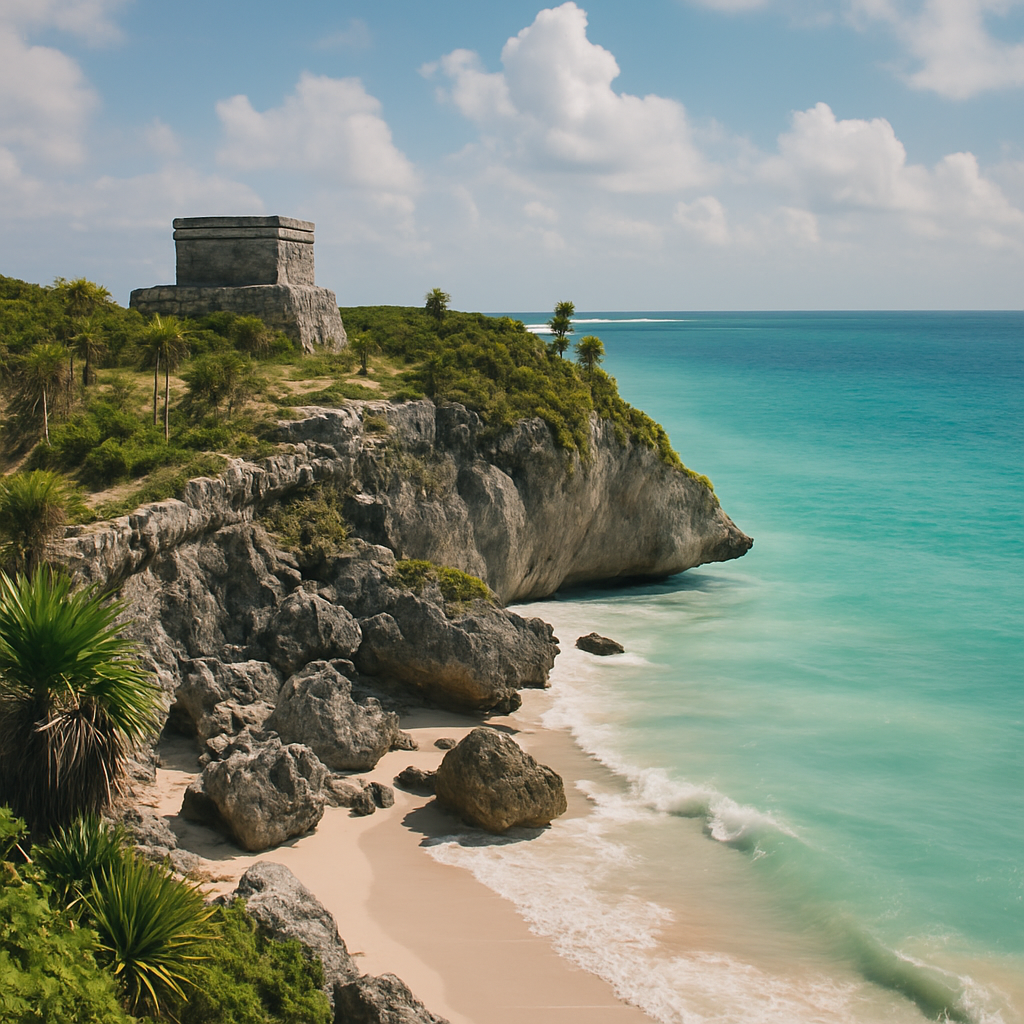
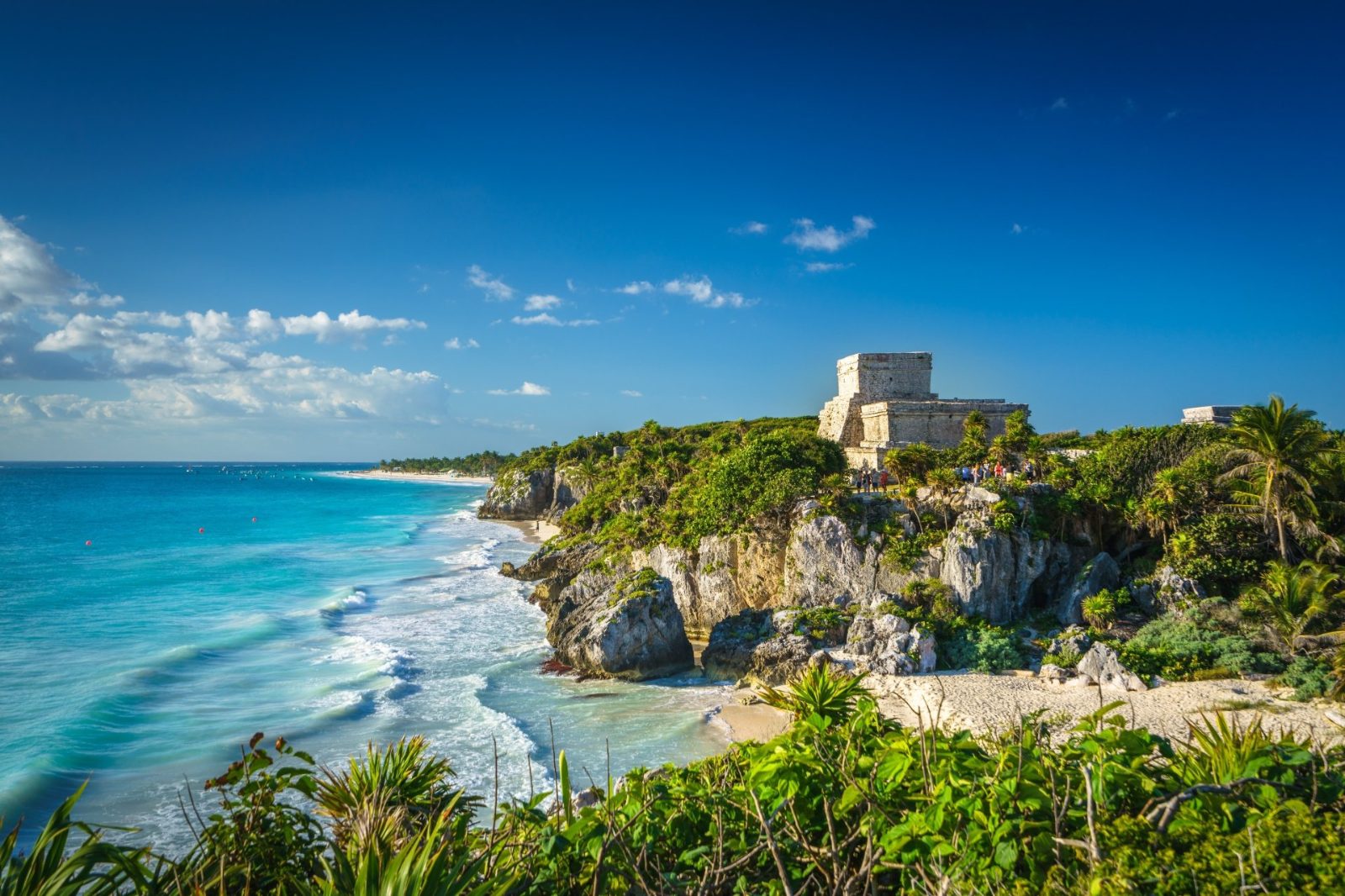
Admire the iconic structure overlooking the Caribbean.
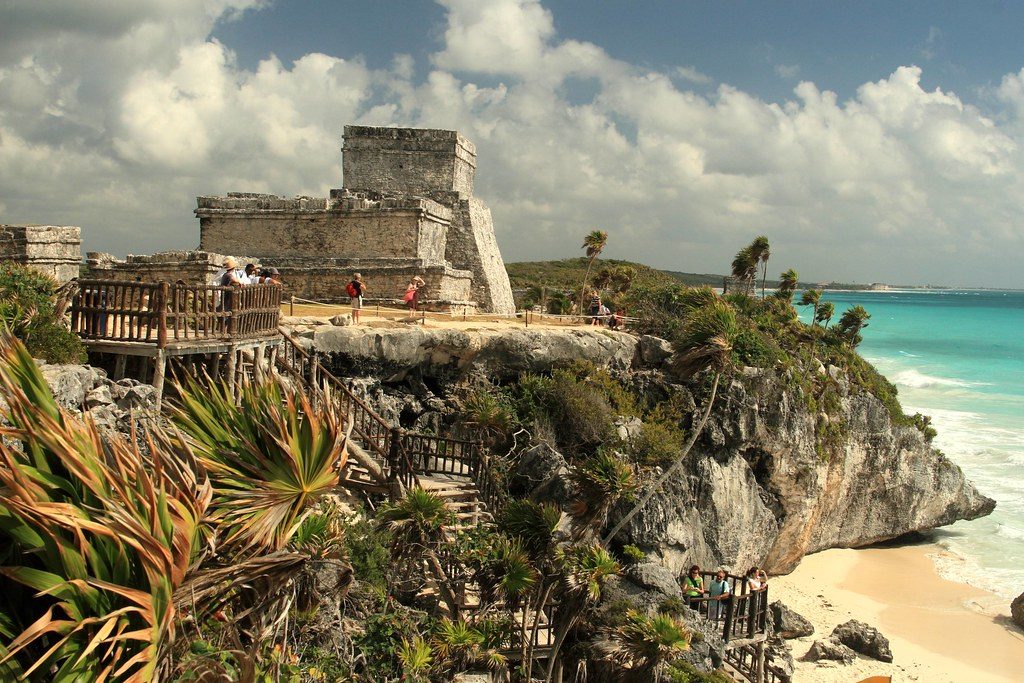
Enjoy the cliffside views along the ruins.
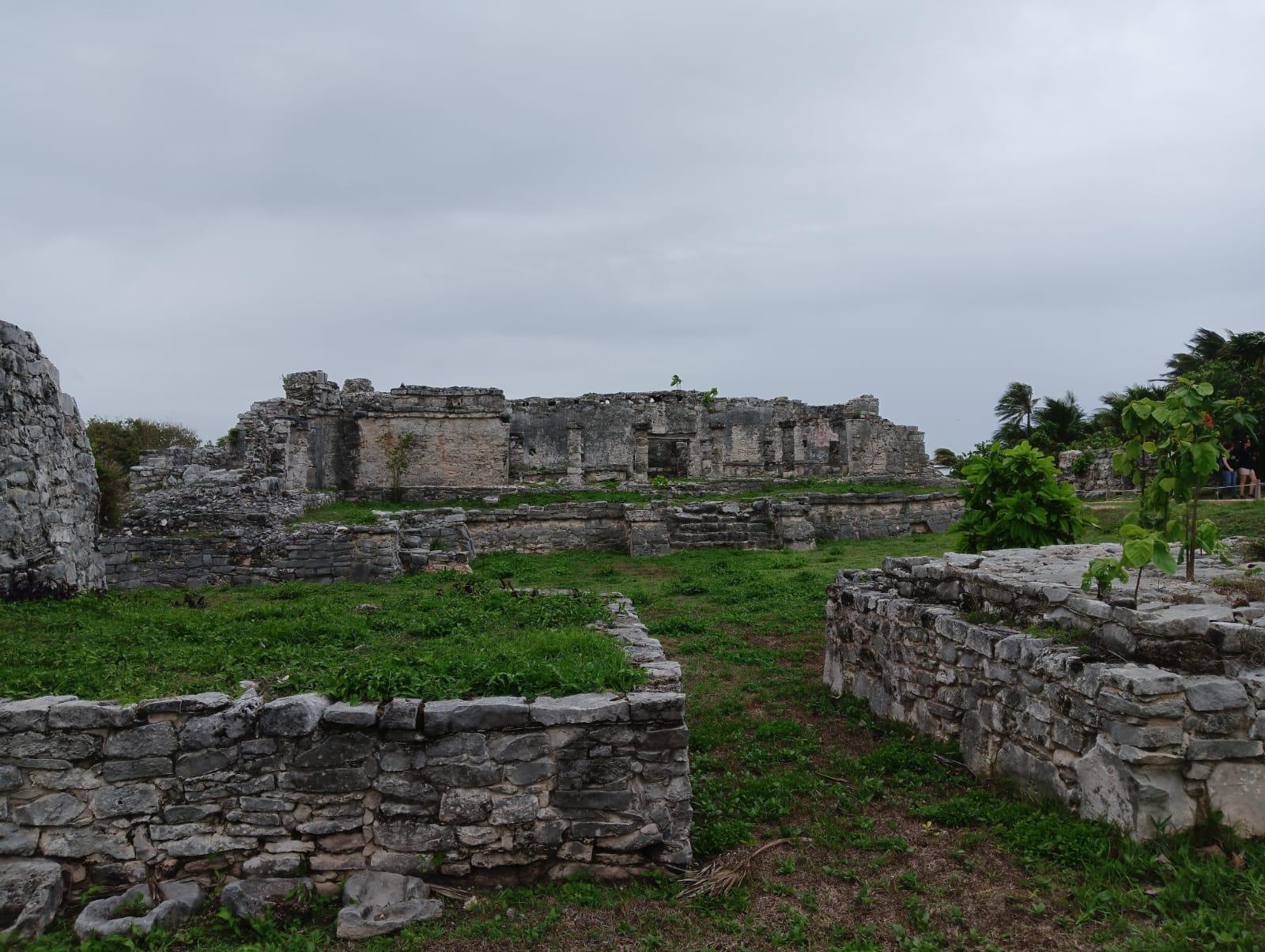
You arrive at Federal Highway 307 Km 230 by 08:00, walking the paved entry path through low jungle before the walls appear. The site opens with the House of the Cenote on your left, its interior chamber descending to a freshwater sinkhole the Maya considered sacred.
You pass through the original gate in the western wall, limestone blocks fitted without mortar, and El Castillo rises straight ahead against open sky.
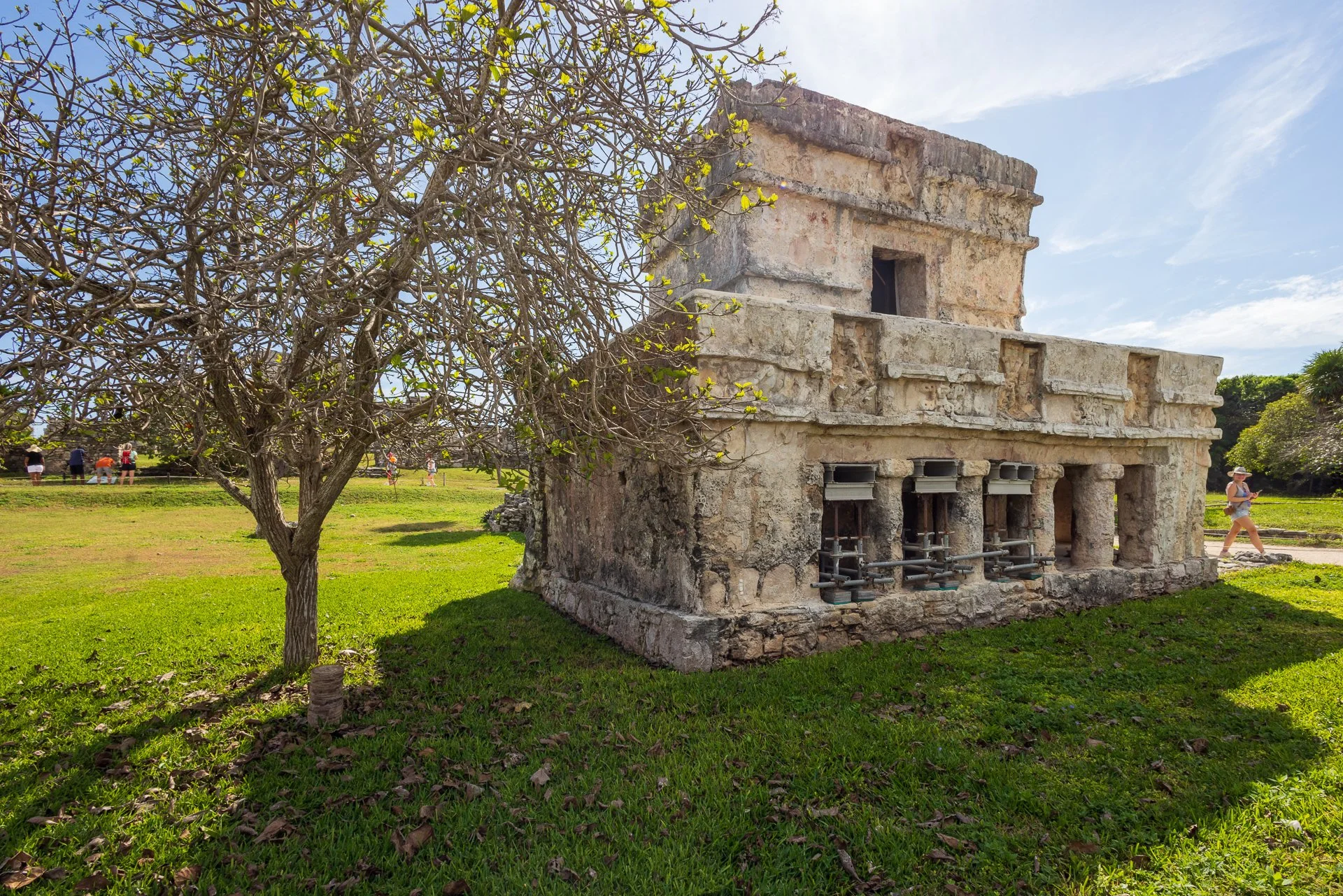
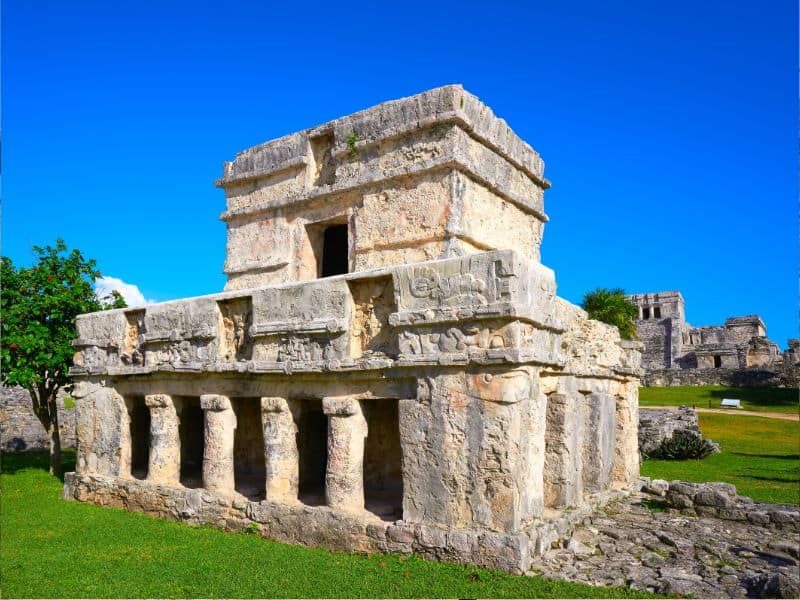
You climb the Castillo's western staircase — forty-two steps worn smooth — reaching the upper platform where the navigation windows frame turquoise water. The Temple of the Frescoes sits below to your right, its ground-floor gallery cool and dim, interior columns carved with figures still holding traces of red and blue pigment. Your guide points to the descending god relief above the temple's central doorway, a figure diving headfirst in stucco, unique to Tulum's architectural vocabulary.
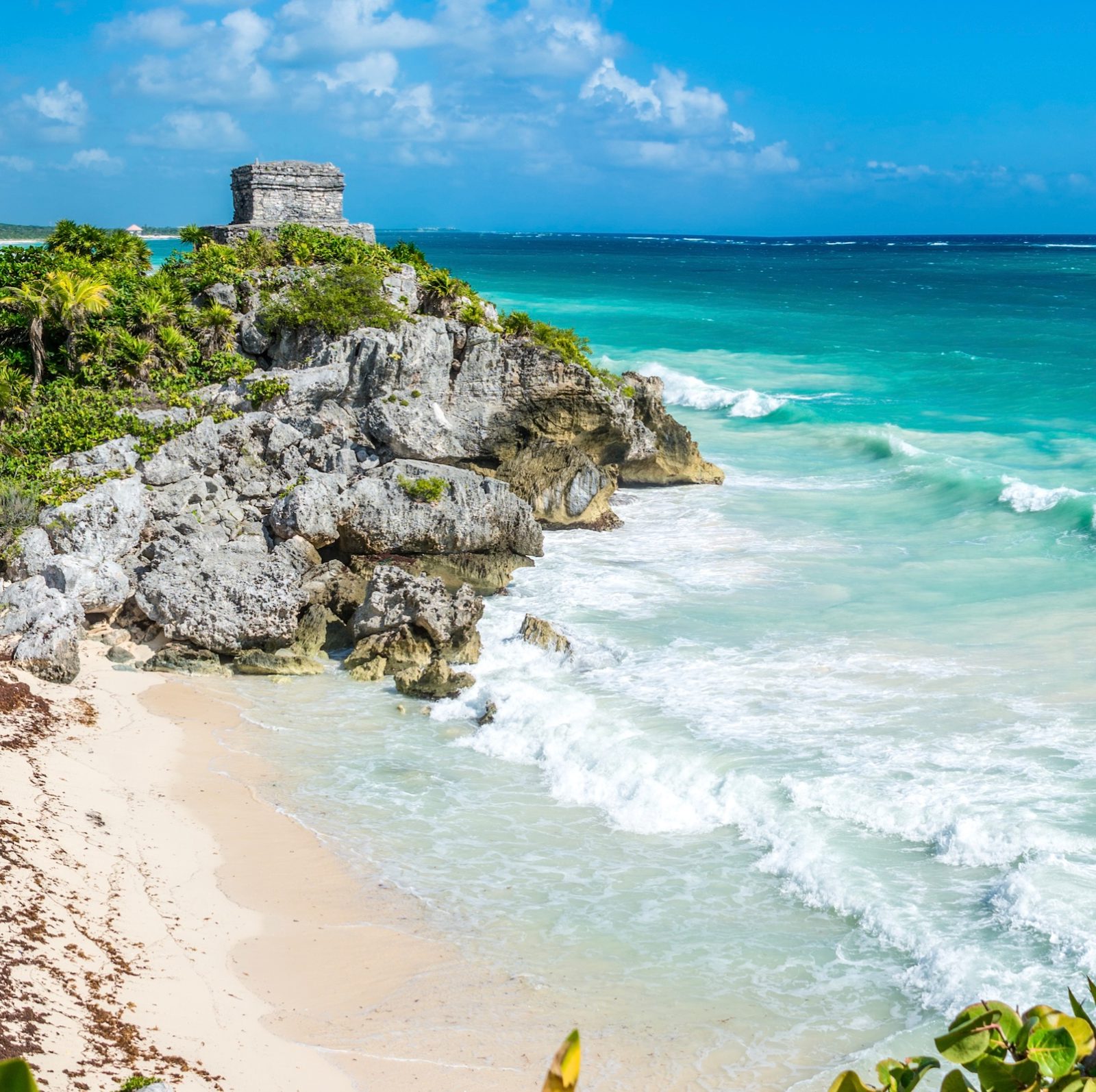
You follow the cliff path north to the Temple of the Wind, a circular platform jutting over the beach, then return through the ceremonial plaza where iguanas sun themselves on cut stone. By 10:00 the site fills with tour groups arriving from the coast; you exit through the northern gate as vendors begin setting up along the parking area. The entire walk covers less than one kilometer.
All the details about your upcoming adventure in one place
A tulum ruins tour takes you through one of the Yucatán Peninsula's most photographed Maya sites, perched on 12-meter cliffs above the Caribbean Sea. Guided tulum ruins tour tours cover the walled city's Temple of the Frescoes, El Castillo, and the Temple of the Descending God, explaining the site's role as a 13th-century port and ceremonial center. Many tulum ruins tour tickets include access to the beach below the ruins, where you can swim after exploring the archaeological zone.
Tulum's walled city stood as the only Maya fortress built directly on the Caribbean coast, its limestone ramparts rising thirteen feet above the cliffs and enclosing a ceremonial core of just 1,600 square meters.
Construction began around 1200 CE during the late Postclassic period, centuries after the collapse of inland centers like Tikal and Palenque. The site functioned as a critical port for obsidian, jade, and cacao arriving by sea from Yucatán's northern trade networks and departing overland toward the interior. Spanish chronicler Juan Díaz, sailing with Juan de Grijalva in 1518, described a city "as large as Sevilla" with fires burning in temples visible from the water — the last major Maya settlement Europeans encountered still thriving.
El Castillo, the 7.5-meter pyramid anchoring the site's eastern edge, served dual roles as temple and navigation beacon. Ships approaching from Cozumel aligned their course with two small windows cut through the structure's upper chamber, using the sight line to thread the reef break 200 meters offshore. The Temple of the Frescoes retains interior murals depicting the rain god Chaac and the diving god unique to Tulum's iconography, painted in blue-green pigments derived from local minerals. These frescoes, protected under later corbel vaults, represent some of the most intact late Maya painting visible without museum mediation.
Today the archaeological zone receives over two million visitors annually, making it Mexico's third most-visited ancient site after Teotihuacán and Chichén Itzá. The combination of accessible architecture, Caribbean backdrop, and proximity to Riviera Maya resorts has transformed Tulum into a mandatory stop on nearly every regional itinerary. Guided tours from Playa del Carmen and Cancún typically allocate ninety minutes on-site, enough to walk the perimeter wall, climb the Castillo's front staircase, and photograph the Temple of the Wind perched on its isolated outcrop. The 265-MXN entrance fee covers access to all standing structures except those undergoing active conservation. Cenote swim packages pair the ruins with underground freshwater pools an hour inland, extending half-day excursions into full-day circuits through the Yucatán's karst geology.
Ships approaching from Cozumel aligned their course with two small windows cut through the Castillo's upper chamber, using the sight line to thread the reef break 200 meters offshore.
Wear light, breathable clothing and comfortable walking shoes suitable for sandy paths and stone structures. Modest attire is appreciated at this Tulum Archaeological Site, so consider covering swimwear before entering.
Staff at the Tulum Archaeological Site perform mandatory bag checks at the entrance. Keep backpacks compact and avoid bringing bulky items that require storage.
Personal photography with handheld cameras and cell phones is permitted throughout the Tulum Archaeological Site. Professional video equipment, drones, and tripods require advance permits and additional fees.
The Tulum Archaeological Site is suitable for families, though it can become hot during midday. Ensure children remain on marked paths and supervise them near cliff edges.
Main pathways are generally flat and accessible, though some areas of the Tulum Archaeological Site feature uneven stone surfaces. Visitors with mobility aids should navigate cautiously near cliffside sections.
Consumption of food inside the Tulum Archaeological Site is restricted. Bring water in reusable metal or thermal bottles only, as single-use plastic bottles are prohibited.
Opening hours
08:00–17:00 daily
Address
Federal Highway No. 307 Km. 230, Municipality of Tulum, Quintana Roo, Mexico
Accessibility
Wheelchair-accessible paths available
Best arrival window
08:00–10:00
Storage
No lockers available on-site
Official site
https://lugares.inah.gob.mx/es/zonas-arqueologicas/sitios/2135-tulum.html
Car · 30–60 mins · Parking fees apply
Follow Federal Highway No. 307 to the parking area near the entrance.
Public transport · 45–75 mins · Low cost
Take a local bus or colectivo to the main highway drop-off point.
Taxi · 15–20 mins · Variable pricing
Hire a private taxi from Tulum Town or local hotels directly to the site entrance.
General entry tickets are typically non-refundable once purchased. The 265 MXN entrance fee covers access to the archaeological site as regulated by national authorities.
Recommended time
2-3 hours
Most visitors spend about two to three hours walking the cliffside paths and exploring the ancient limestone structures. Arriving during the 08:00–10:00 window helps you bypass the largest groups from organized tulum ruins tour packages. As the sun climbs, heat intensifies, making the early hours essential for securing tulum ruins tour tickets without long waits. Choosing an early tulum ruins tour tours slot ensures a more peaceful experience at this coastal landmark before midday cruise ship traffic peaks.
Crowd levels through the day
Weather · crowds · average price — dots go green to amber to red as each metric rises.
Mild temperatures and lower humidity make for comfortable exploration of the Tulum Archaeological Site during March and April.
Expect hot, humid conditions; arrive at 08:00 to complete your tulum ruins tour before the midday sun peaks.
September brings warmer weather and occasional showers; visit early to enjoy the site before the afternoon heat.
Cooler weather makes this the most popular season; expect busier paths and plan your tulum ruins tour arrival early.
Carry a reusable thermal bottle to stay hydrated while navigating the shadeless Tulum Archaeological Site.
Tulum rose between 1200 and 1450 CE as the Maya civilization's only major fortress city built directly on the Caribbean coast. The settlement's original name, Zama—meaning dawn—reflected its position facing the sunrise, while Spanish conquistadors later christened it Tulum, meaning wall, after the massive limestone barrier enclosing three sides of the ceremonial center. This defensive perimeter, stretching five meters high and 400 meters along the landward approaches, protected a thriving maritime port that controlled jade, obsidian, and cacao trade routes extending from central Mexico to Honduras. Archaeological evidence reveals that Tulum's harbor, sheltered by the barrier reef offshore, accommodated wooden canoes carrying up to forty passengers and heavy cargo through a natural break in the coral. The city flourished under the political influence of Mayapan until that power center collapsed in 1441, leaving Tulum as an independent trading post. When Spanish explorers Juan Díaz and Grijalva sailed past in 1518, they recorded a settlement as large as Seville, with temples so brilliant their stucco facades could be seen from ships three leagues offshore. The frescoes inside the Temple of the Frescoes, completed around 1450, depict supernatural beings and agricultural cycles in pigments that retained vivid blues and reds for centuries. Despite epidemics introduced by European contact, Tulum remained inhabited until the late 1500s, outlasting most Maya cities of the Postclassic period. American explorer John Lloyd Stephens and British artist Frederick Catherwood documented the ruins in 1842, publishing illustrations that sparked international interest. Mexican archaeologist Miguel Ángel Fernández directed the first systematic excavations in 1916, uncovering burial sites and ceramic sequences that established Tulum's chronology. The site opened to the public in 1972, and by the 1980s, mass tourism began reshaping the surrounding coastline. Today, visitors on a Tulum ruins tour walk the same coastal platform where Maya merchants once unloaded trade goods, the Caribbean still visible through the temple doorways as it was six centuries ago.
Tulum emerges as a fortified Maya port controlling Caribbean trade routes.
Mayapan's collapse leaves Tulum functioning as an independent trading center.
Spanish explorers Díaz and Grijalva record observing a city rivaling Seville in size.
The city is abandoned after epidemics decimate the coastal Maya population.
Stephens and Catherwood publish detailed illustrations that introduce Tulum to Western audiences.
Miguel Ángel Fernández conducts the first archaeological excavations at the site.
The Mexican government opens Tulum to public visitation as a protected archaeological zone.
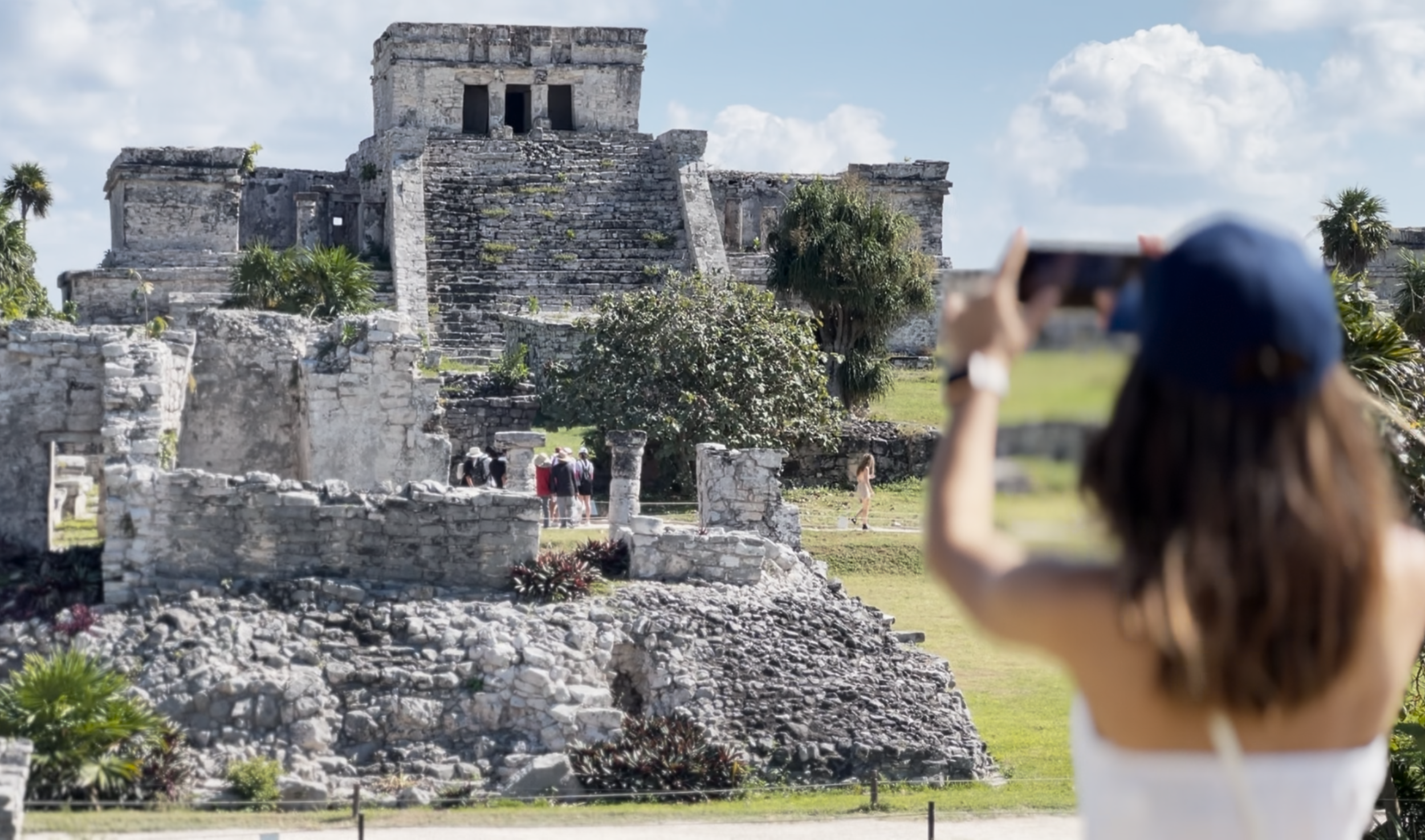
Position your camera at the northern edge of the main structure to capture the limestone temple framed against the Caribbean Sea. This angle is essential for a Tulum ruins tour image.
Stand directly across from the main entrance to capture the intricate stucco carvings and original red pigment remnants. Use a wide-angle lens to include the garden setting.
Descend the wooden staircase leading toward the beach for a low-angle perspective looking up at the ancient buildings perched on the limestone cliff. These tulum ruins tour tours often pause here for the classic profile shot.
Located at the base of the ruins, this spot allows you to photograph the temple silhouette against the ocean backdrop. You will need tulum ruins tour tickets to access this lower area.
Dining options near your tulum ruins tour are primarily located at the shopping plaza near the main parking area. Visitors often prefer these establishments to grab a quick bite before heading back to the hotel zone or exploring other nearby Maya landmarks.
A popular spot for roasted chicken and local sides located within walking distance of the archaeological site entrance. It is ideal for a fast, protein-heavy meal after your tulum ruins tour tours.
Real experiences from real travelers
We arrived at opening to avoid crowds on our tulum ruins tour and had El Castillo nearly to ourselves for twenty minutes. The Caribbean backdrop makes these Mayan structures especially photogenic. Bring water since shade is limited.
The archaeological site sits on dramatic limestone cliffs above turquoise water. Our guide explained the astronomical alignments built into the Temple of the Wind. Access to the beach below is now restricted but the views from the platforms are remarkable.
Smaller than Chichen Itza but the oceanfront setting is unmatched. We spent two hours exploring the walled city complex and Temple of the Frescoes with remnants of original murals. Arrive early or late to photograph El Castillo without crowds blocking the frame.
The tulum ruins tour exceeded expectations despite the midday heat. The main pyramid overlooks a stunning beach where sea turtles nest. Structures are roped off so you cannot climb inside, but the coastal panorama compensates. Wear a hat and sunscreen.
Walking through the ancient Mayan port city with Caribbean breezes was memorable. The Temple of the Descending God has intricate carvings still visible after centuries. Our tour included details about maritime trade routes that made Tulum prosperous. Entry feels well organized.
Watched dawn illuminate the stone walls from the eastern viewpoint. Fewer tourists at this hour meant we could appreciate the sacred geometry in peace. The fusion of archaeology and natural beauty here is powerful. Paths are well maintained and clearly marked.
You can cover the entire walled complex in ninety minutes but we lingered for three hours. El Castillo stands as a beacon visible from the beach below. Our guide pointed out stucco remnants and explained the site's role as a lighthouse for Mayan canoes navigating the reef.
The tulum ruins tour provided context we would have missed exploring alone. Temples align with solar events and the House of the Cenote reveals underground water access. Caribbean views from every vantage point. Afternoon thunderstorms rolled in quickly so check weather.
El Castillo pyramid framed by palm trees and azure sea is exactly as striking as photographs suggest. Stone structures show sophisticated masonry techniques. We visited on a Wednesday morning and still encountered tour groups, but the site never felt overcrowded. Informative plaques throughout.
The archaeological zone preserves one of the last Mayan cities built before Spanish contact. Walking the ancient pathways with ocean winds and seabird calls creates an immersive experience. Temple of the Frescoes retains faint pigment traces. Allow time to simply sit and absorb the atmosphere.
Everything you need to know for your journey
The Tulum Archaeological Site is open daily from 08:00–17:00. Arrive at 08:00 to maximize your time.
Yes, many third-party providers offer skip-the-line tulum ruins tour tickets to bypass the main entrance queue.
Single-use plastics, drones, and tripods are among the prohibited items at the Tulum Archaeological Site.
The Tulum Archaeological Site features pathways that are generally accessible, though some sections have uneven surfaces.
The best arrival window for any tulum ruins tour is 08:00–10:00 to avoid heat and crowds.
Wear comfortable, breathable clothing and supportive shoes suitable for walking around the Tulum Archaeological Site.
Outside food is restricted; please keep snacks packed in reusable containers during your tulum ruins tour.
The Tulum Archaeological Site is located at Federal Highway No. 307 Km. 230 and is accessible by car, taxi, or local bus.
Official site guides are available for hire at the entrance of the Tulum Archaeological Site.
There is no strict time limit on your tulum ruins tour, but re-entry is not permitted once you exit the site.
A scenic beach with white sand perfect for relaxation after your tulum ruins tour.
Protected natural area surrounding the ruins featuring trails and ecosystems.
A quieter coastal area known for its natural beauty and connection to Mayan history.
Convenient access to local dining and transport for your tulum ruins tour.
High-end stays located along the coastal road near the ruins entrance.
Sustainable accommodations offering a unique stay near the jungle and coast.
Join thousands of happy travelers who have discovered this incredible experience
Book Your Experience Now